Muscat: The Royal Opera House
I had a couple of days to explore Oman on my own before the workshop started. Knowing that the ensuing days would involve a lot of very early starts, I decided to let my body decide when to wake up, so I put the Do Not Disturb card on the outside of the door. I noticed that the other side of the card said “Please Come In”. I couldn’t help thinking there was at least one option between those two I would have added.
I awoke at a reasonable time, and after a good breakfast, I pulled up the Otaxi app (the Omani version of Uber). The only car option available was “Luxury” at a GBP equivalent of £52. I tried a few more times with the same result (ref the definition of insanity). Then Google came to my aid. It turns out that if you are setting off from a hotel, Otaxi assumes you are rich. On the collective advice of the internet, I walked 50 metres round the corner and tried again. This time a standard taxi for a price of just over £4.
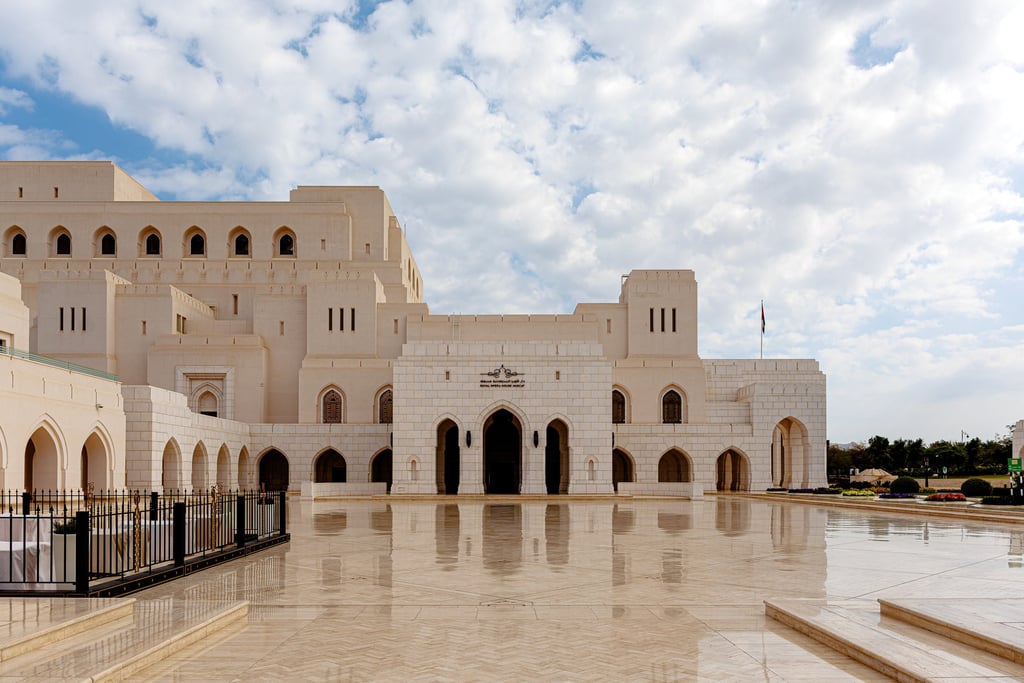
Being interested in the arts, I decided to visit the Royal Opera House (see above photo of the side elevation). Only completed in 2011, it was the first opera house on the Arabian peninsula and the project was initiated by Sultan Taboos who has a keen interest in classical music, and is also an accomplished organist. This latter fact is significant given a unique feature of the building which I shall explain later on.
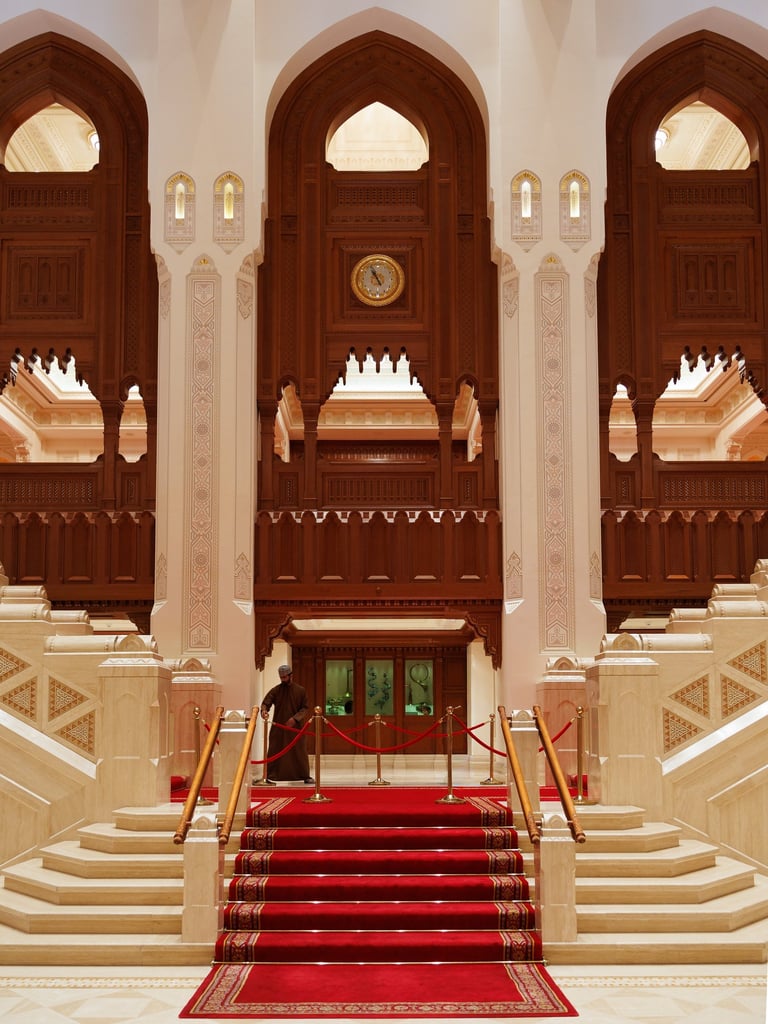
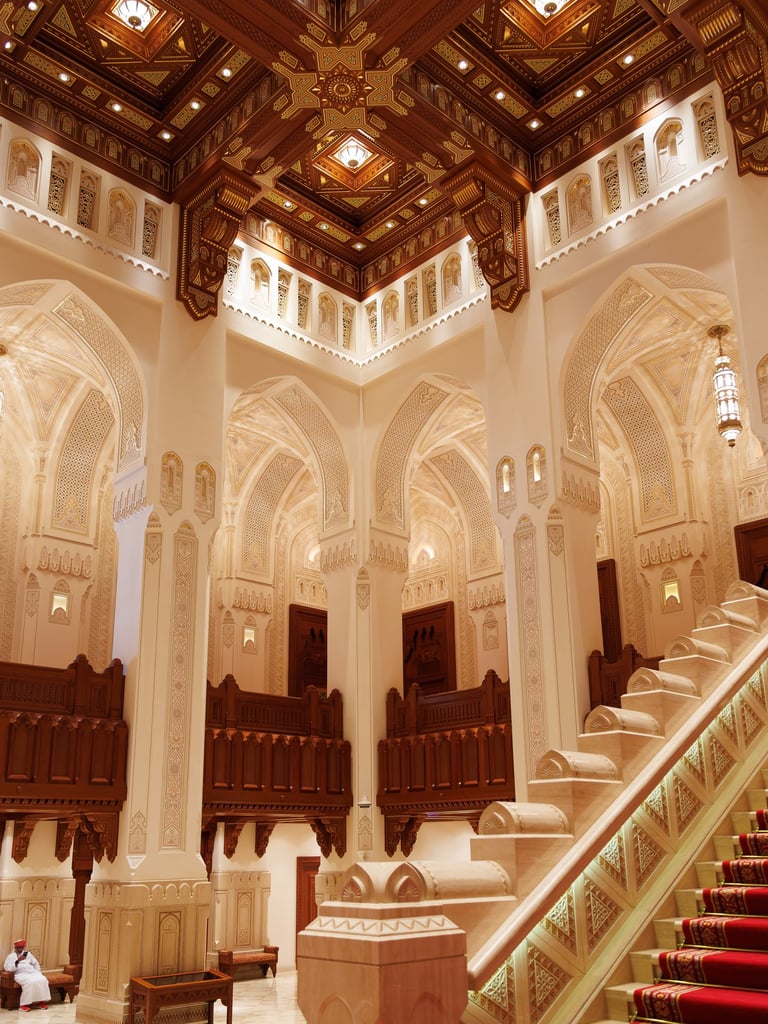
The architecture is a mix of traditional Arabic and contemporary designs, using walls of pink limestone from the Omani desert, mahogany carvings on ceilings and balconies, and marble interiors.
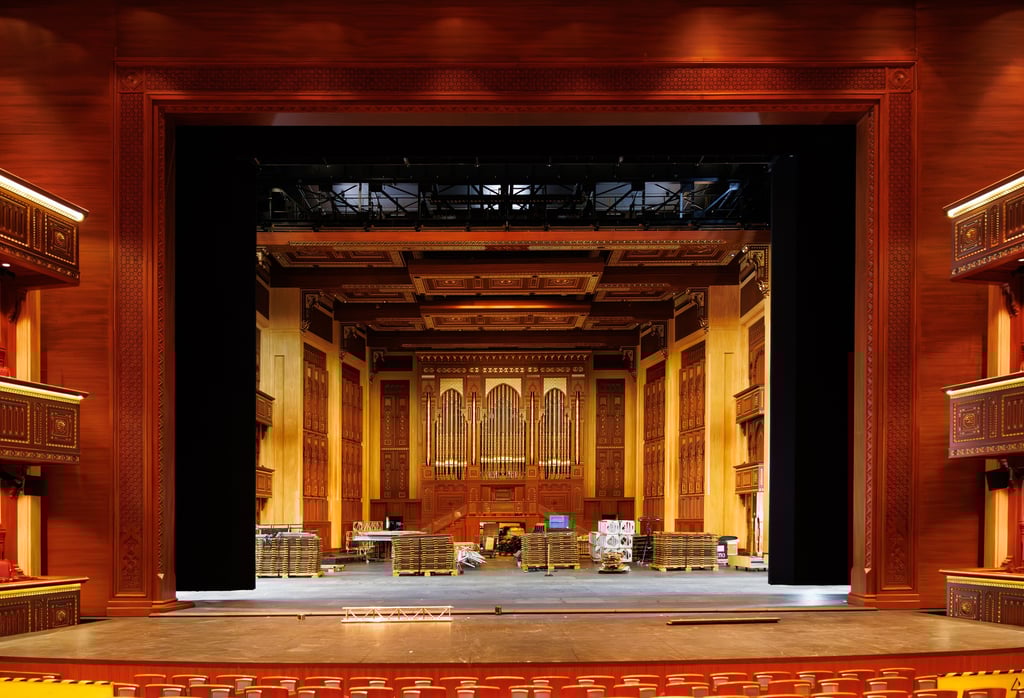
The auditorium (below) is rich in colour with mahogany and red upholstery. Each seat contains screens for subtitles.
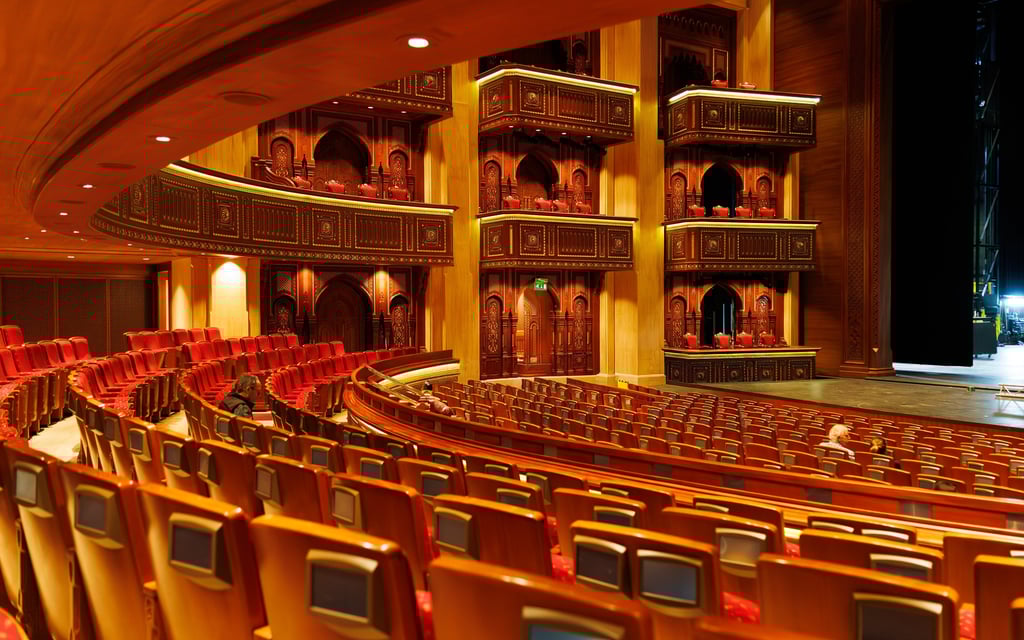
But the really interesting thing about this venue is its ability to transform itself from opera house to concert hall at the touch of a button. Now it has to be acknowledged that I never found this button - otherwise you can be sure I would have pressed it - and so I am unable to verify this completely, but if you look towards the back of the stage (below photo), you can observe a large pipe organ set within a massive stage set/"orchestra shell".
Apparently, the whole thing moves forward, the proscenium arch retracts, and the auditorium and orchestra shell join together seamlessly to form the concert hall.
I was not able to attend a performance to judge for myself, but the building contains sophisticated electronics to ensure acoustic excellence, irrespective of the configuration.