Thimphu: the capital city
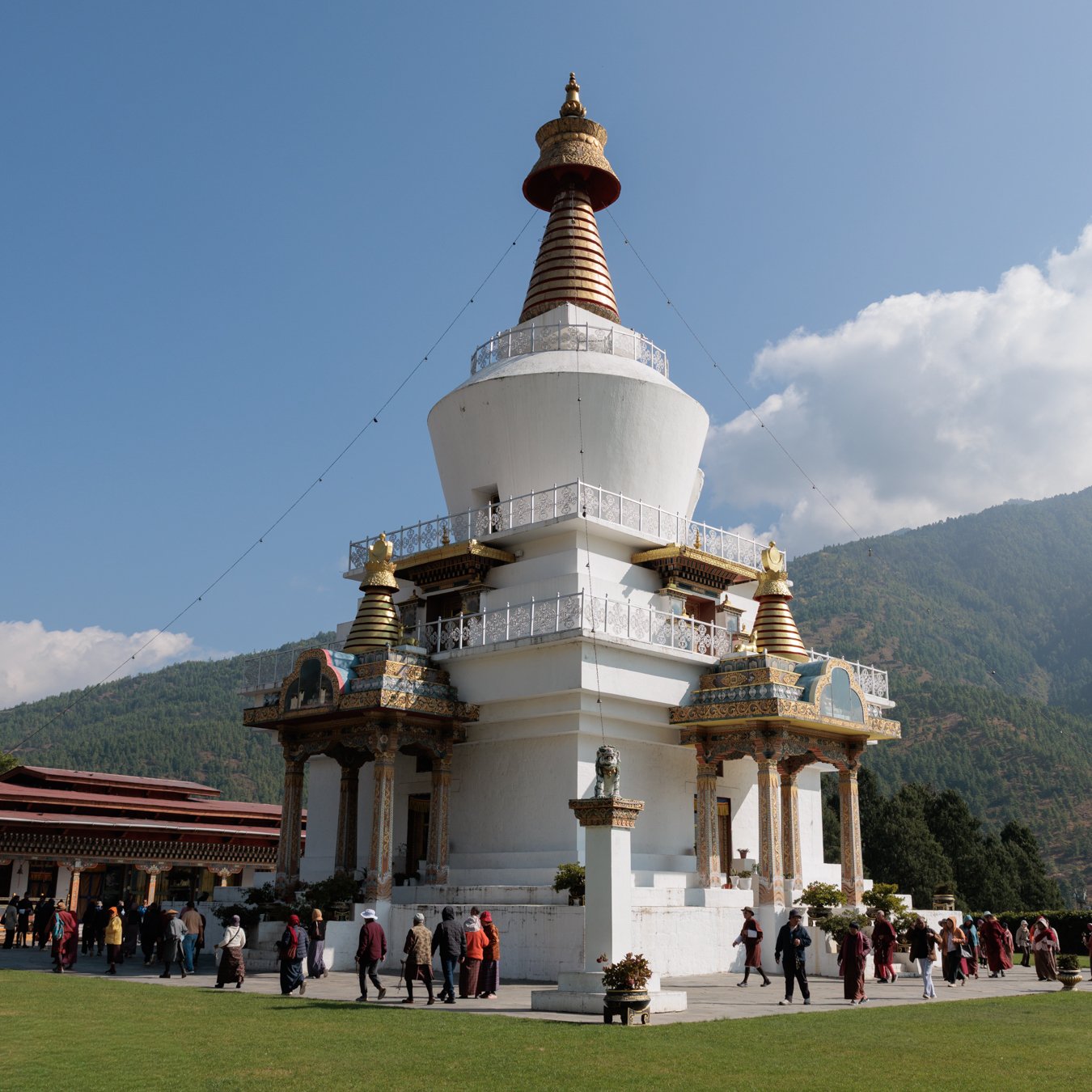
The Memorial Chorten
Our day started in Thimpu, the capital city with a visit to the National Memorial Chorten, built in 1974 to remember a former King of Bhutan, Jigme Dorji Wangchuck. Now that’s what I call a name and the first of many I would try and get my tongue around.
The chorten was my first introduction to a religious site in Bhutan where people ceremonially walk round it repeatedly (always clockwise) and spin prayer wheels. The idea of something mechanical like this has always appealed to me – nothing worse than going to a museum and having nothing you can touch in my opinion.
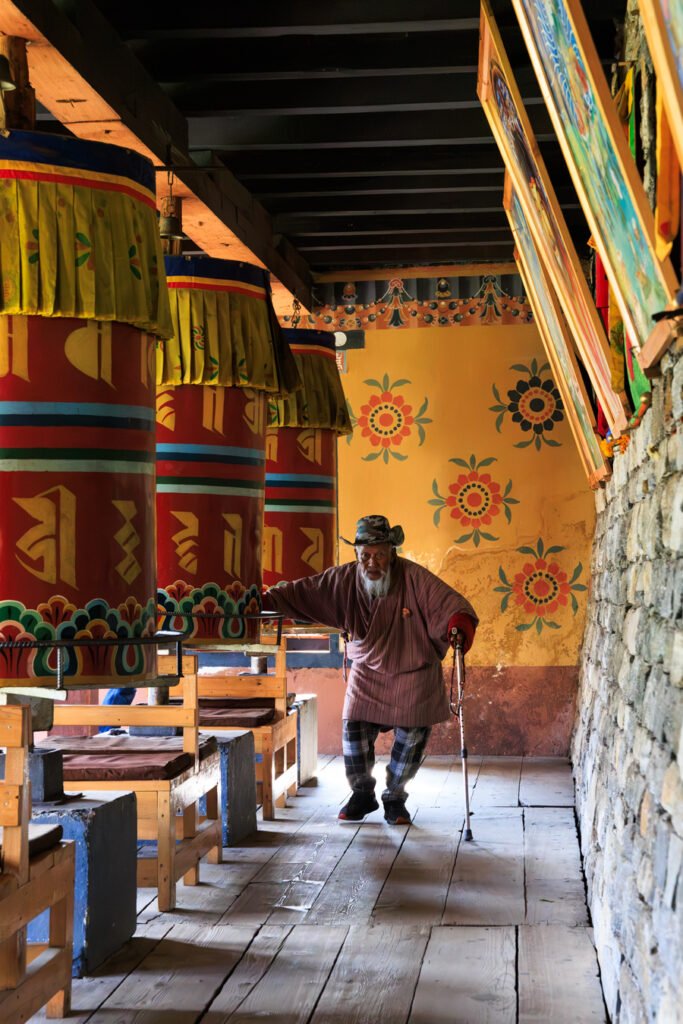
These prayer wheels contain mantras and a complete rotation of each wheel counts as if you had recited it out loud. This strikes me as a pretty efficient way of going about things.
In addition to the clockwise walking and prayer wheel spinning, people light candles and pray; the praying aspect involves standing, kneeling, lying prostrate and getting up again multiple times
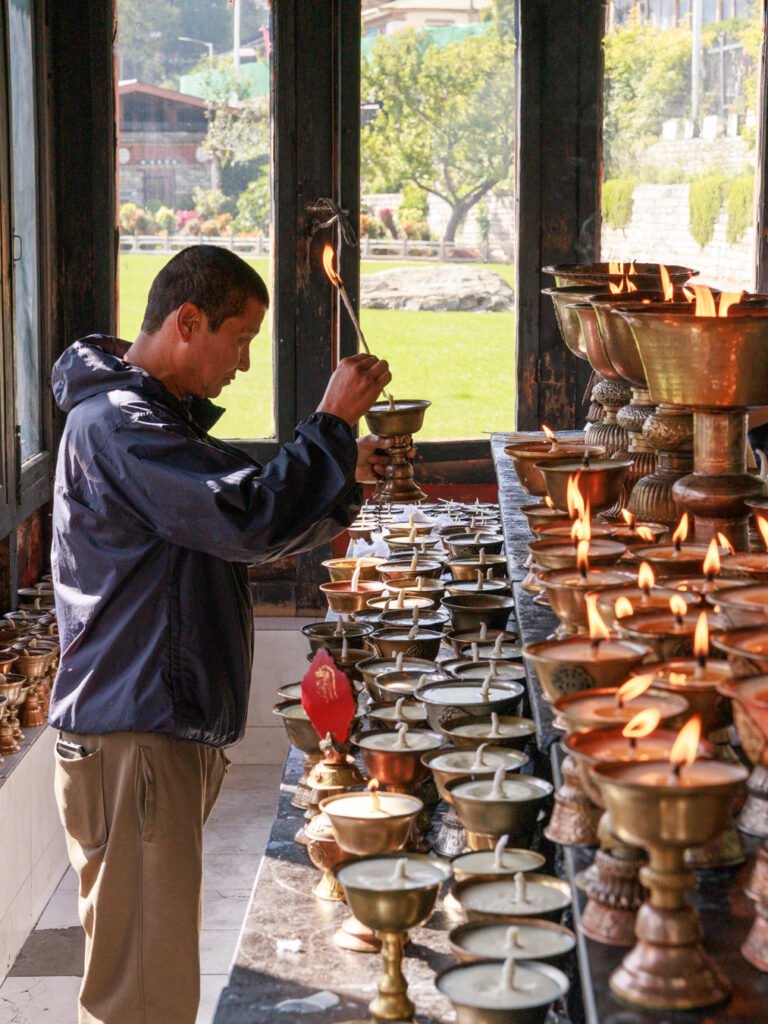
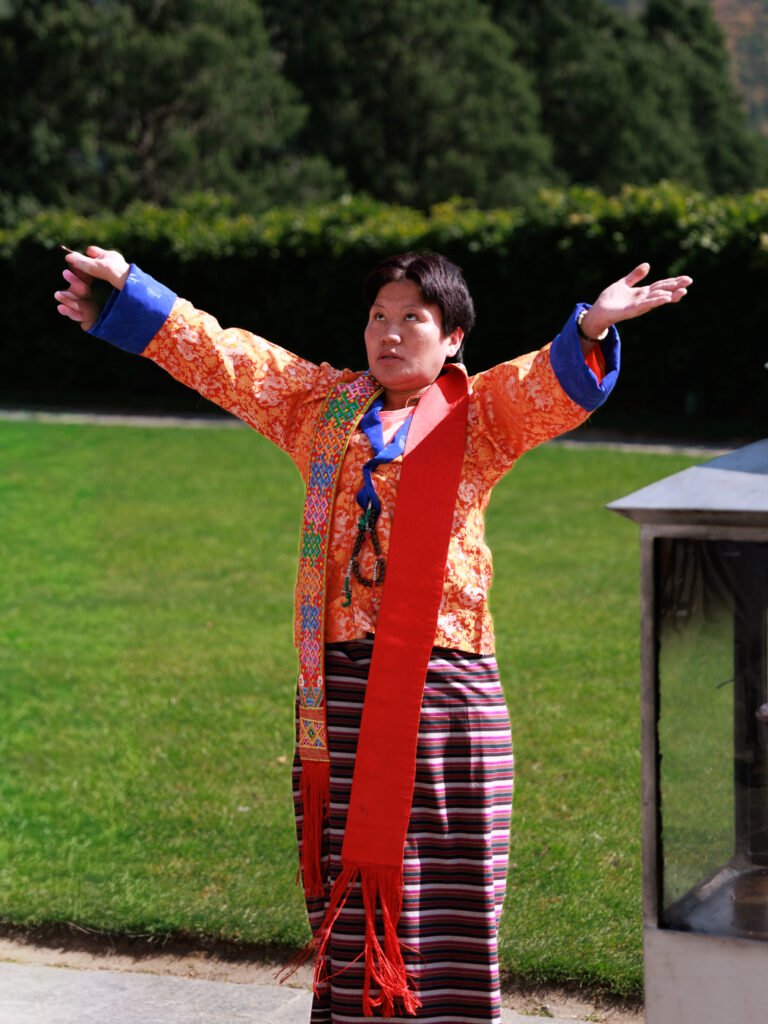
Apart from the spiritual benefits that accrue from all this, it’s jolly good physical exercise so good for mind body and soul.
Great Buddha Dordenma
From there, we headed to the Great Buddha Dordenma high on the hillside outside the town. One of the largest in the world (54 metres high) and guess what? It was covered in scaffolding.
I’ve lost count of the number of times I’ve visited famous monuments and buildings and had this happen.
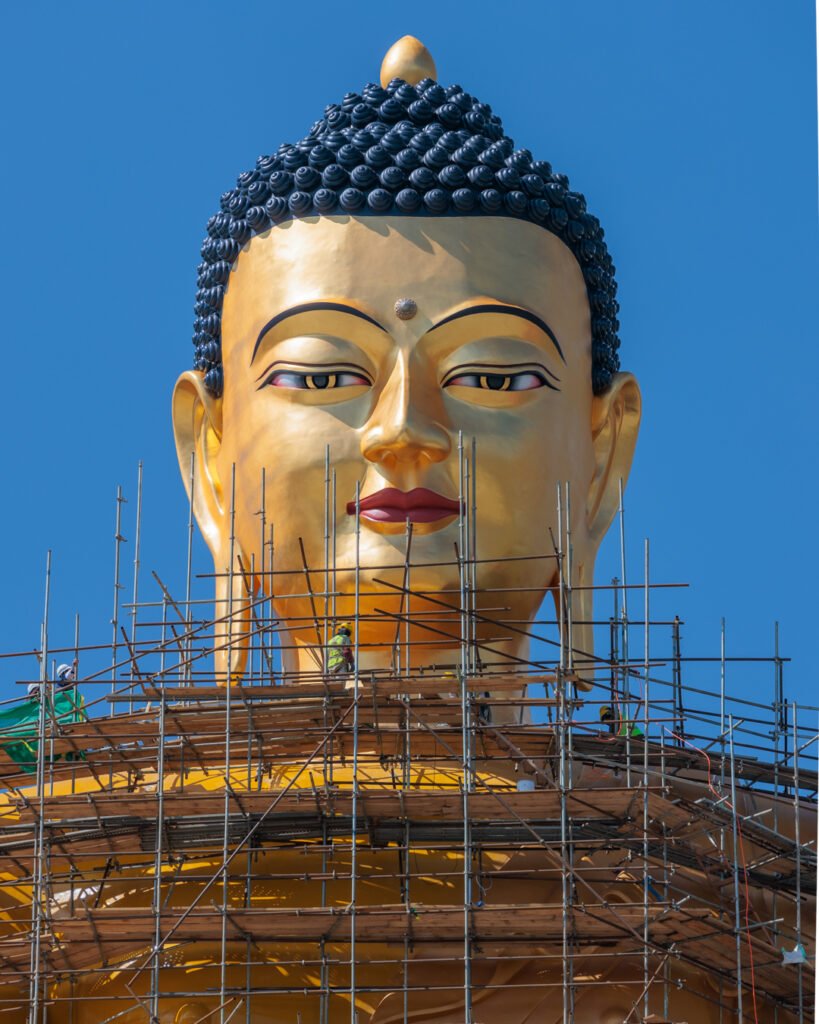
But was still possible to admire its enormity. Inside the statue are 125,000 smaller Buddhas apparently, but we couldn’t see those, of course.
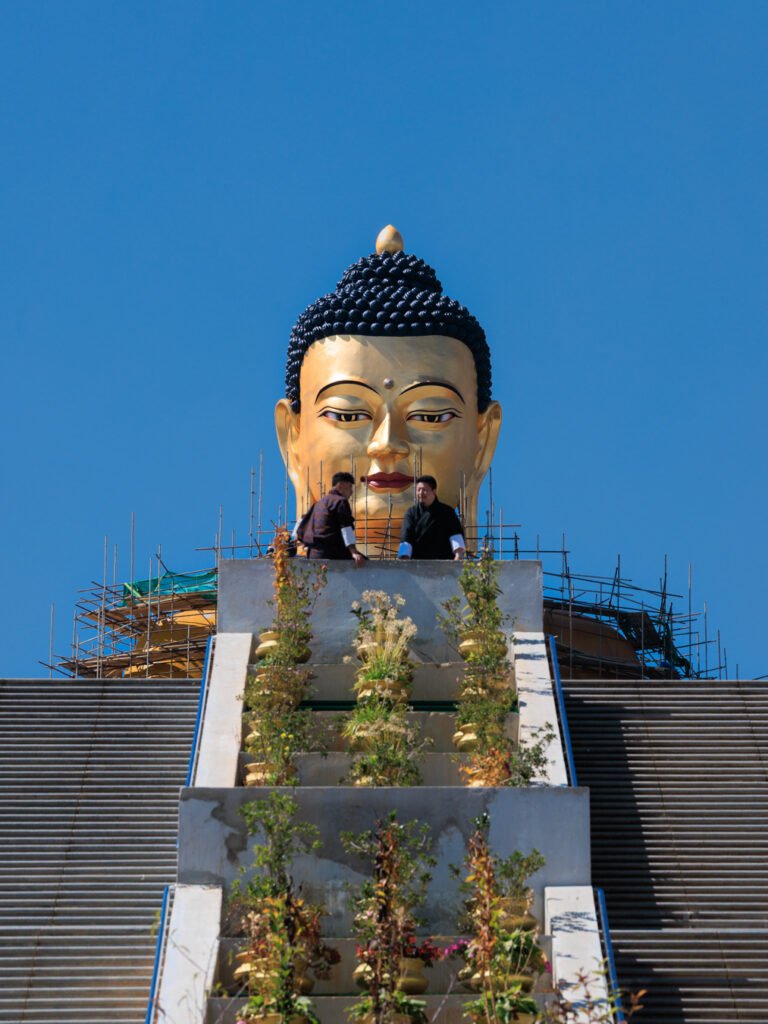
Built to fulfil a prophecy that said its construction would bring peace and happiness to the world (according to the local beliefs), we can only hope these come about in our currently troubled world.
I noted on our return to the city the following week, that the scaffolding had been removed but alas no time to revisit.
National Institute for Zorig Chusum
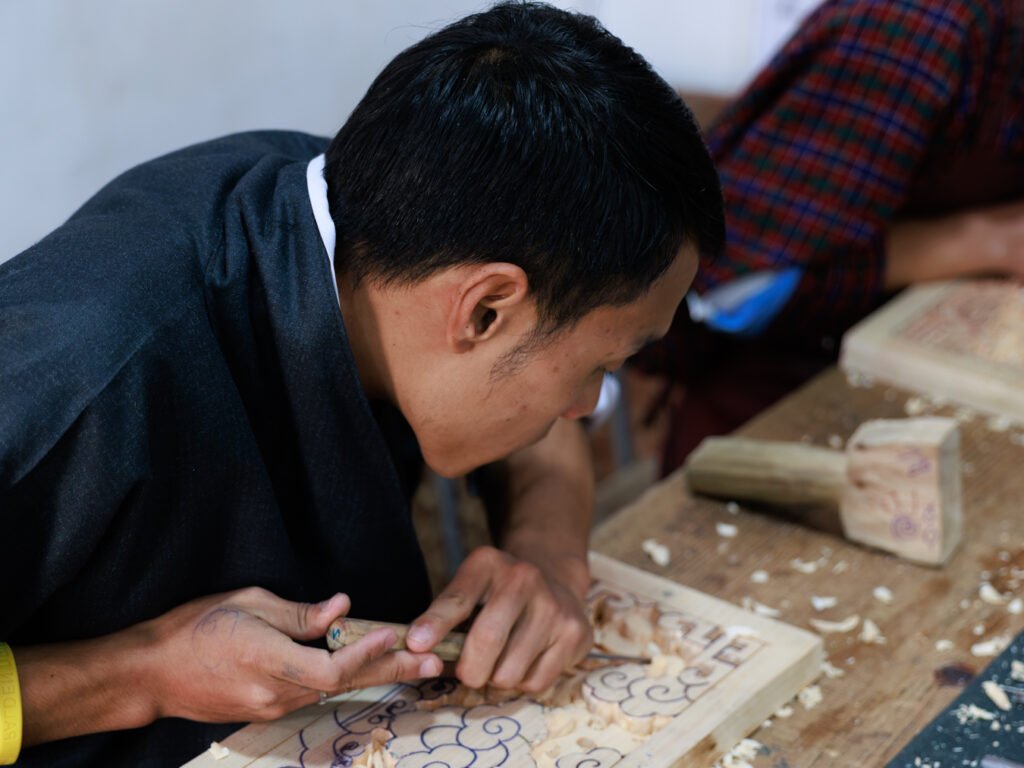
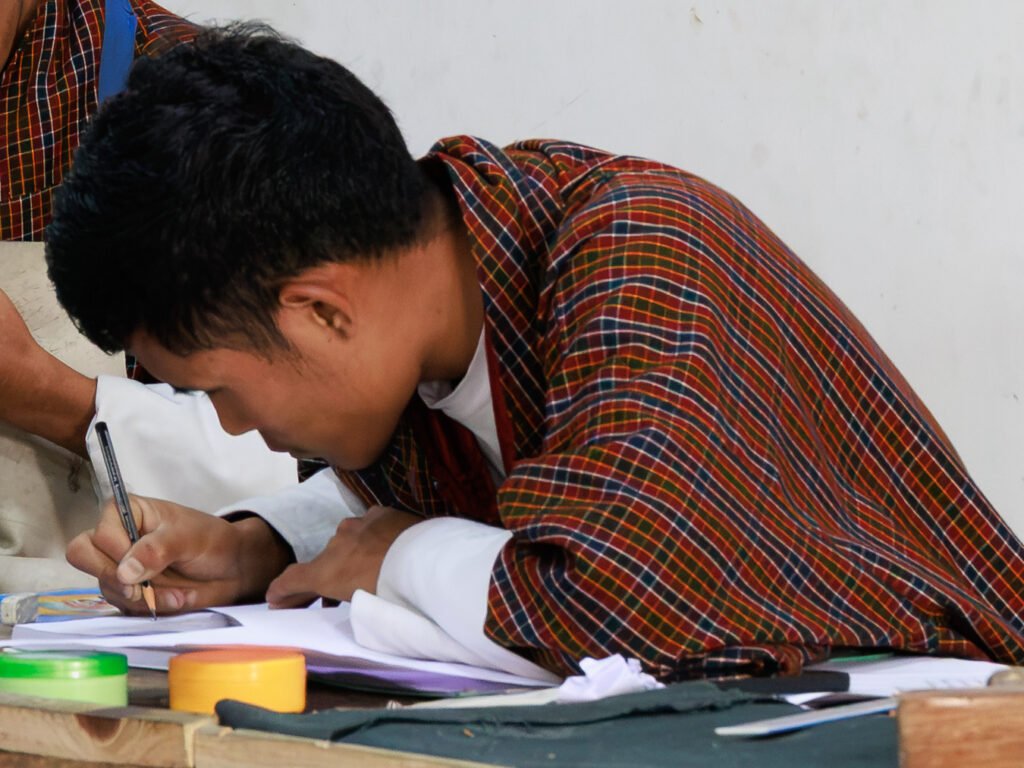
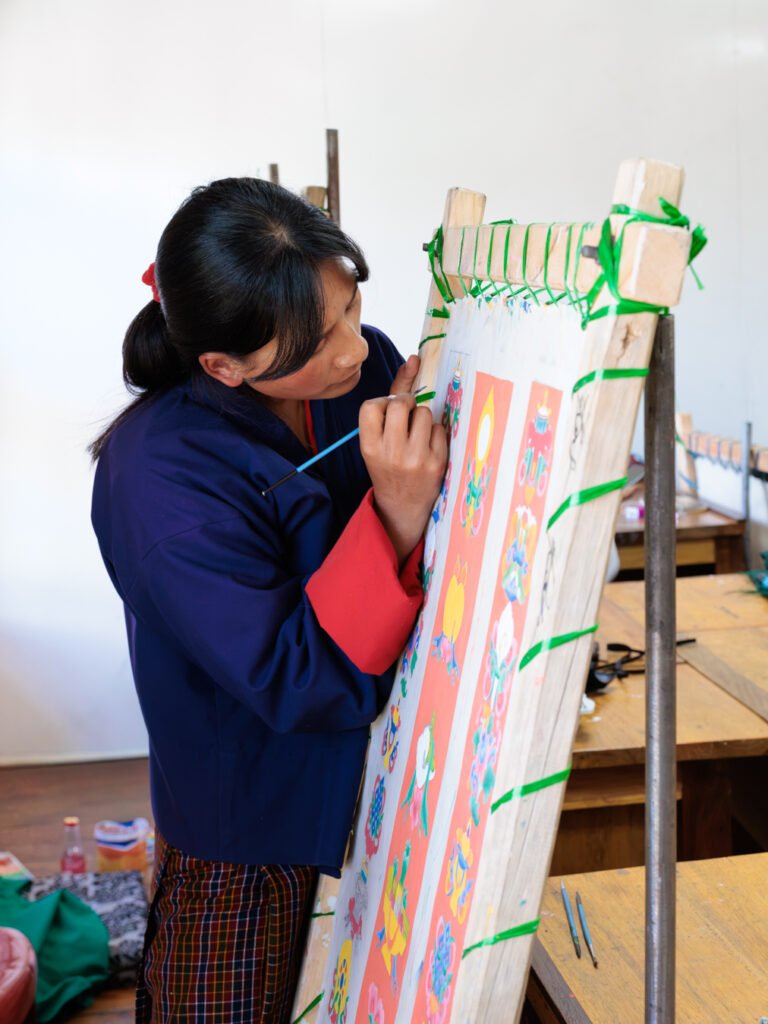
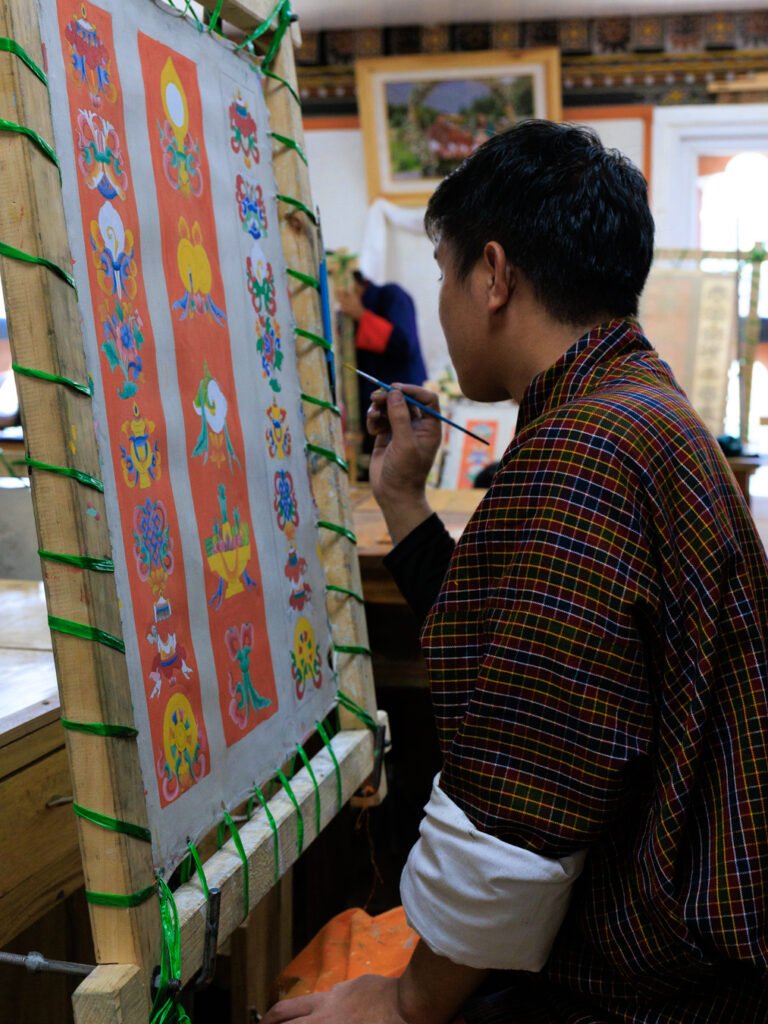
Zorig Chasm is the term for thirteen traditional arts and crafts of Bhutan, encompassing painting, carpentry, carving, sculpting, bronze casting, blacksmithing, bamboo work, embroidery, gold and silver smithing, weaving, masonry, paper making, and woodturning.
The institute is a school dedicated to training students in these disciplines and they open their doors to the public so it is possible to walk through the various classrooms observing the students as they work.
But slightly disconcerting was one of the woodcarvings at the entrance to the school, shown below (avert your eyes if you are of a sensitive disposition).
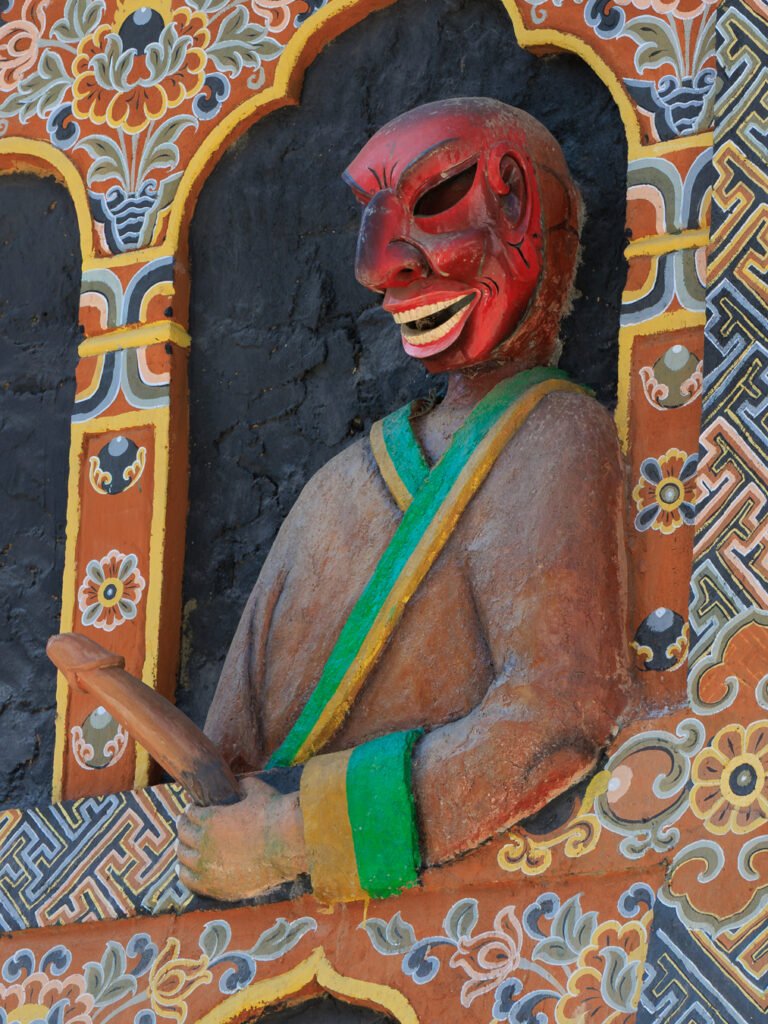
Now, I went to an all boys school and it wasn’t unusual to find similar, if less sophisticated, images drawn onto the walls of the toilet block but here was an intricately carved and painted image right at the public entrance. And this was far from the last one I would see in Bhutan, which celebrates the phallus in a big way; apparently, it serves as spiritual protection and not as something vulgar. They are simply everywhere.
In the adjacent “window” was his, presumably, long-suffering wife. I could read all sorts of things into her facial expression…
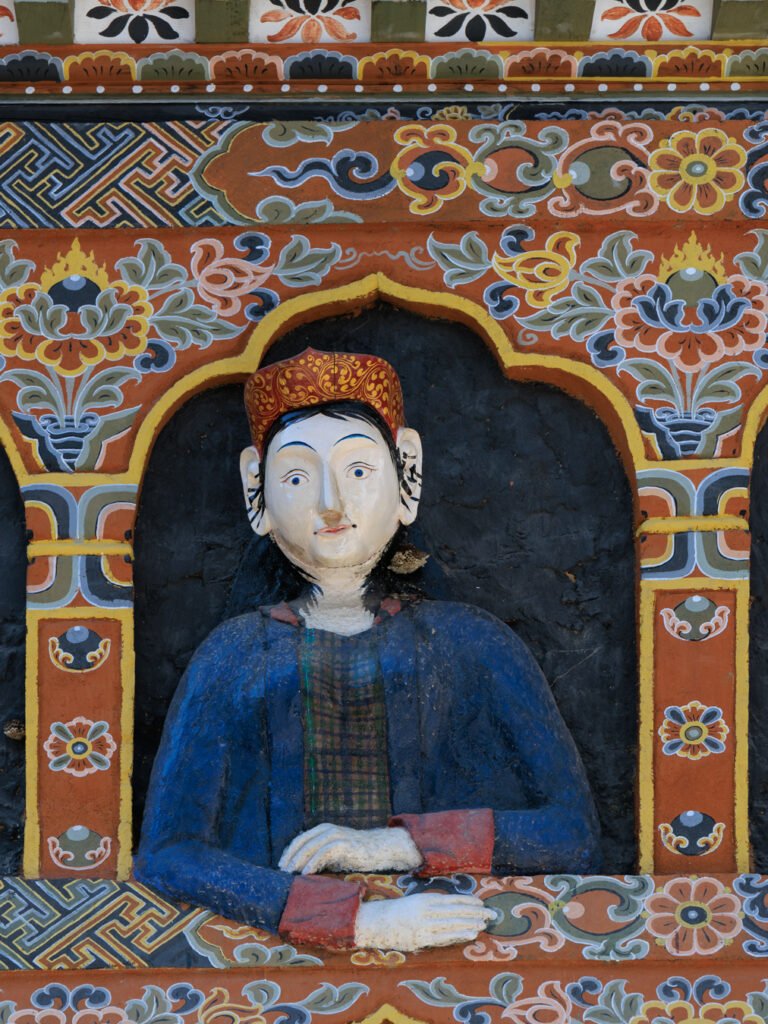
We were able to wander in and out of classrooms quite freely to see the students at work, in stark contrast to schools in the west, whose students these days sit safely behind locked steel doors or cages.
Tashichho Dzong
The afternoon was spent at Thimphu’s Dzong, the latter word meaning fortress-monastery, which serves as the administrative, religious, military and social heart of each district (dzonghag).
The architecture of these Dzongs is quite uniform throughout the country, with white stone walls and dark wood and door frames.
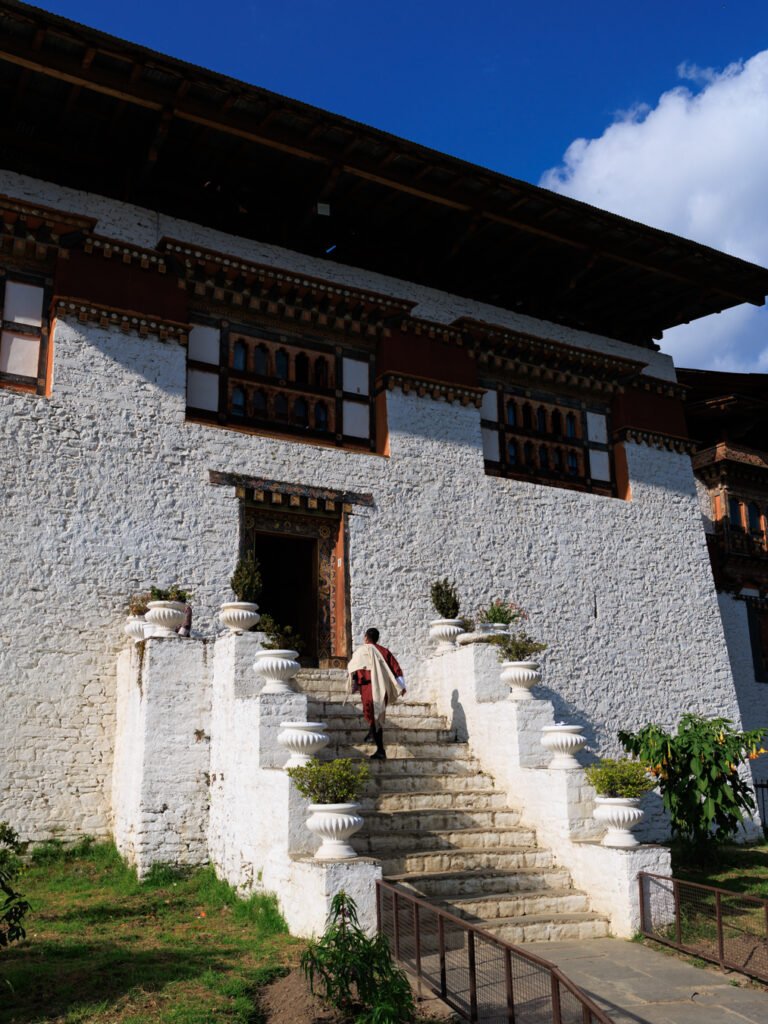
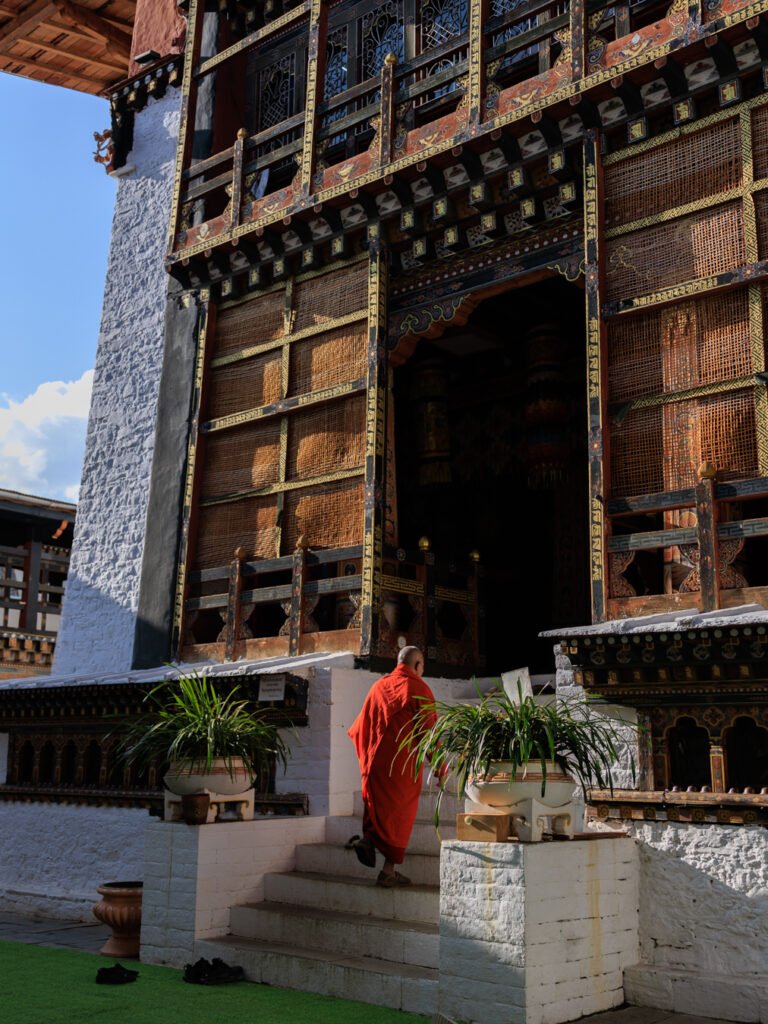
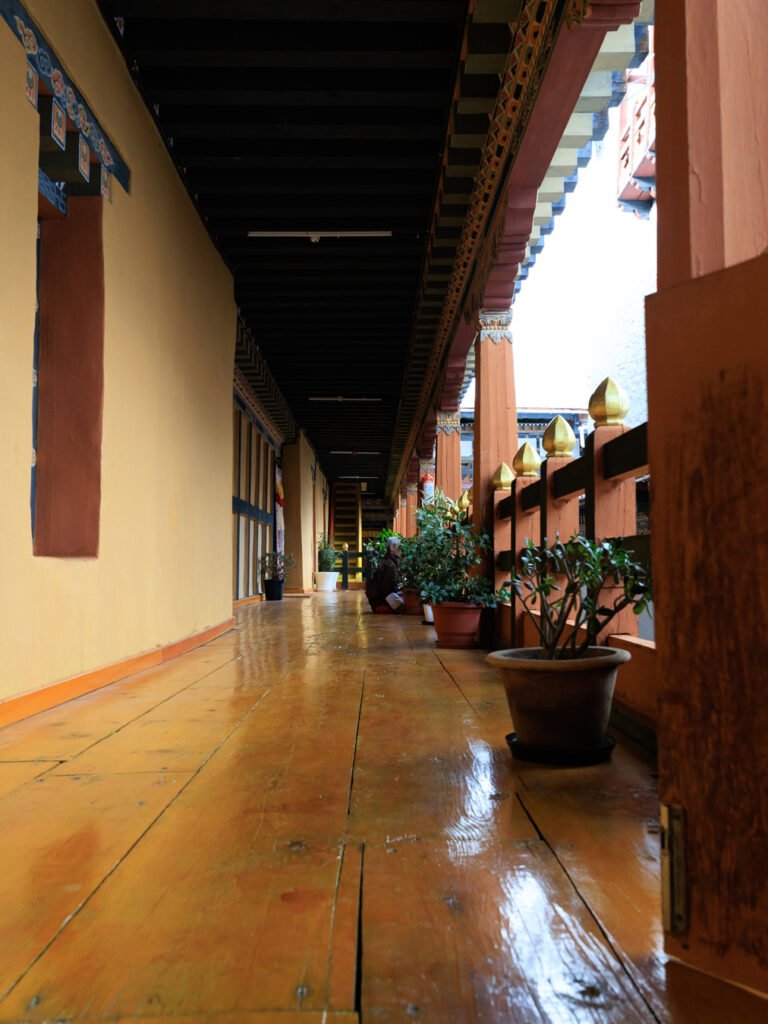
It was my first introduction to buddhist monastic life in Bhutan; I would seemingly spend much of my time in Bhutan chasing monks (and nuns) around in such settings, but they seemed willing enough to be photographed as they went about their lives. Below is one of my favourite captures of a young monk.
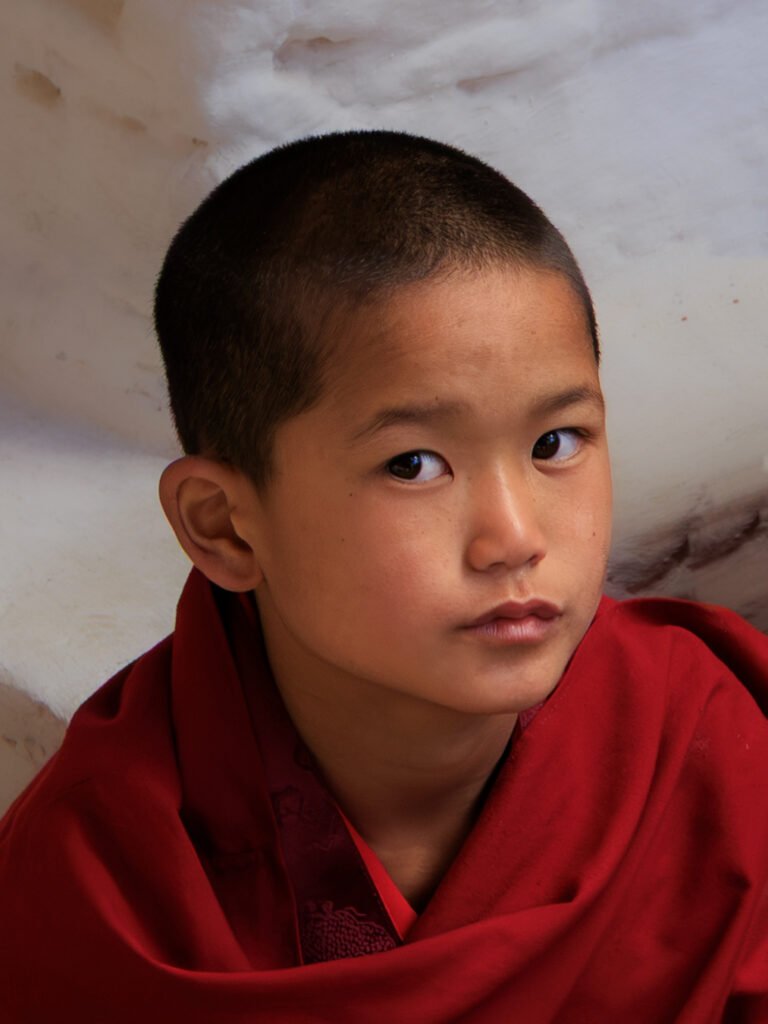
The photo was taken during one of the monastic “debates” which is one of the learning methods that features throughout the country, designed to train monks in Buddhist philosophy, dialectics, and logic.
A debate typically features two primary roles: the challenger stands, pacing or moving dynamically, and fires rapid philosophical questions. The defender sits calmly on the ground, relying purely on memory and canonical training to field the arguments without the aid of books.
It looks as if the challengers are being domineering but in fact the whole act is more symbolic than aggressive and its physical elements keeps the session moving and minds focused.
Thimphu City
Because of the late arrival of my flight the previous day, I didn’t get time to explore much of the capital city itself, but you can see from the photo below, it is quite well developed with distinctive and attractive architecture.
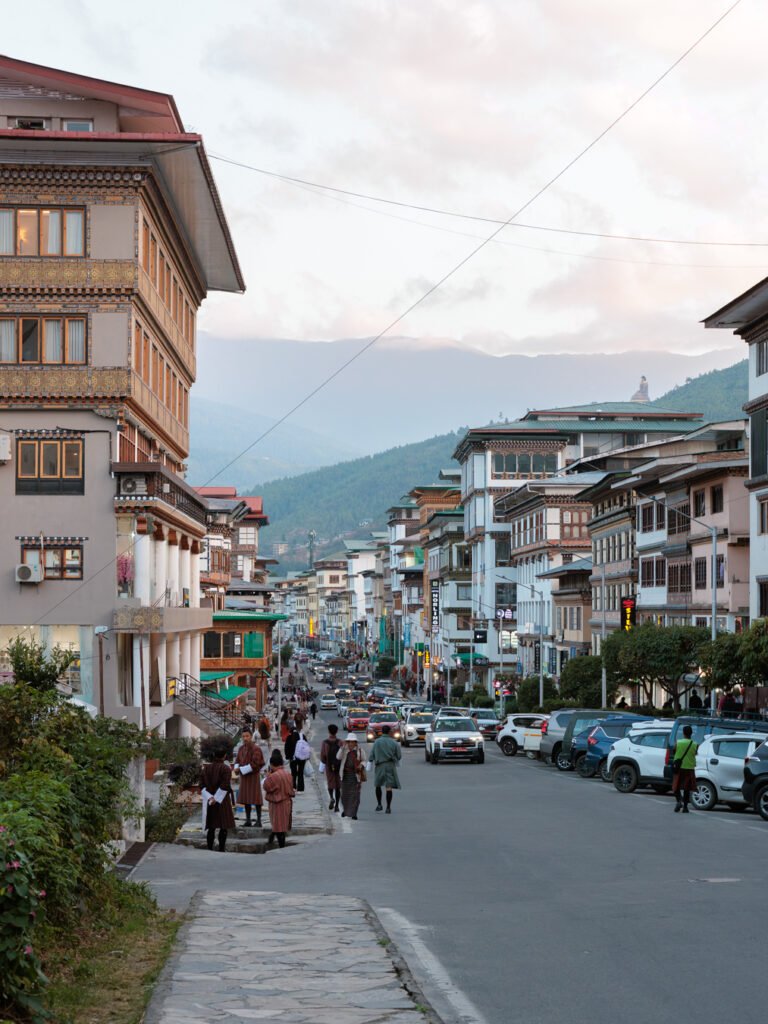
But the day was drawing to a close, and an early start tomorrow for a journey towards Punakha through the Dochula Pass beckoned.