Hiroshima
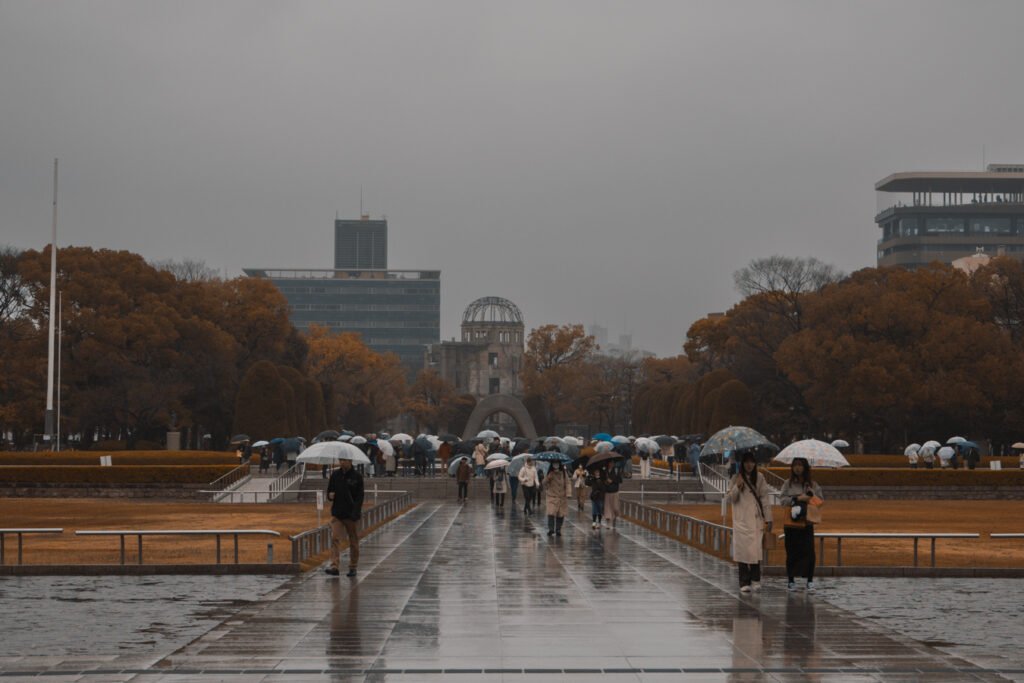
I included Hiroshima on my itinerary because I think it occupies a place in world history that is important to acknowledge.
The journey from the Fuji lakes area to Hiroshima was a few hours on the Shinkansen and we got to experience more of the delights of this service.
The seating is comfortable with supportive seats and plenty of legroom – contrast this with Britain’s latest trains with their hard upright seats that cannot possibly be suitable for any living human.
We also bought bento boxes at the station to eat on the way.
These are well thought out, contain everything you need to season and consume it, including a mini grater for the wasabi. Again, I compare it to the kind of tasteless and unhealthy crap on offer at British railway stations.
On the train, everyone is quiet. Nobody talking loudly or, my pet hate, playing videos on their phones out loud without headphones. I am glad to hear that legislation might be introduced to outlaw this in the UK at some point in the near future.
As you would expect, we arrived in Hiroshima on time and feeling refreshed, such is the smooth and quiet ride the Shinkansen offers.
It’s now a bustling and modern city, having been almost completely destroyed by the atomic bomb in 1945. Prior to that horrendous event, it had existed since the sixteenth century.
From its early origins as a castle town, it grew important as an industrial and military centre which is why it ended up being targeted.
It is estimated that up to 160,000 were killed as a result of the blast and it’s aftermath.
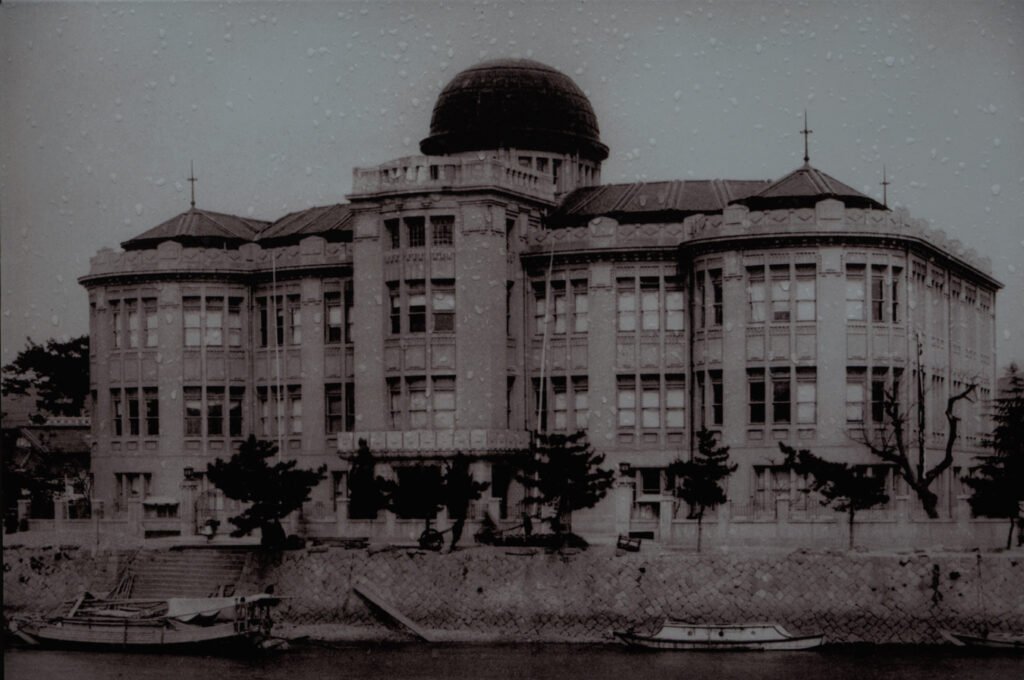
Physically, one building that survived remains to this day: now called the Atomic Bomb Dome, it was originally an exhibition centre or “promotion hall”.
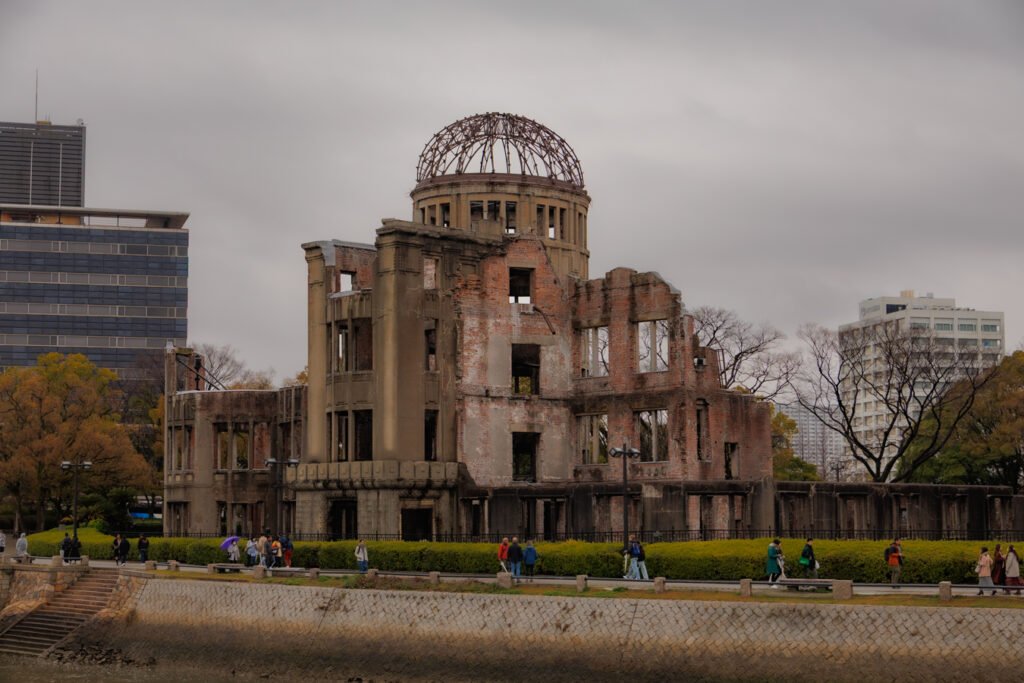
Whilst you are not allowed in, you can get fairly close to it. Below is a picture of the building as it was before.
One question I had was why the area does not have lethal levels of radiation, and the answer is that the bomb exploded high above the city (around 2000m) which apparently maximised its blast damage but meant that radioactive material was not concentrated in the ground but dispersed into the stratosphere. So everyone else got some of it.
But that doesn’t mean there wasn’t huge human suffering on the ground, and a visit to the Peace Memorial Museum is an upsetting experience with so many recovered artefacts telling a story of what occurred.
It didn’t seem appropriate to photograph most of the things in this museum. but this letter stood out to me: correspondence between US government officials preparing to drop “the special bomb”.
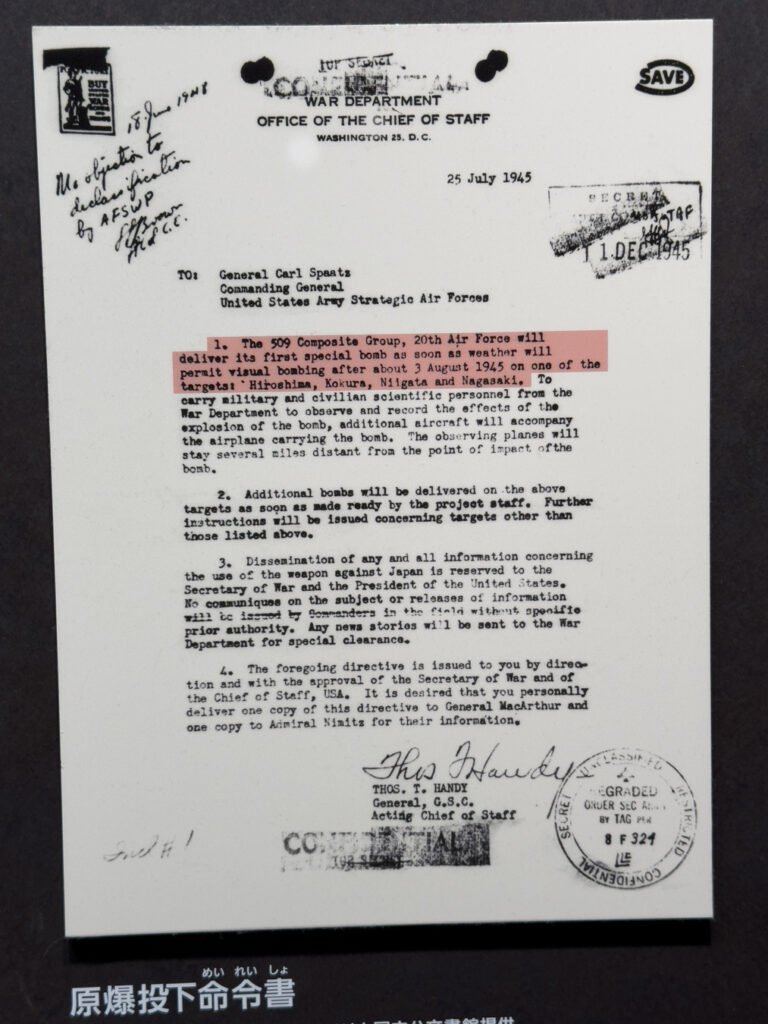
I think a visit to this museum should be made compulsoy for all current and potential world leaders. Wouldn’t it be nice to think we could all stop inflicting harm on each other?
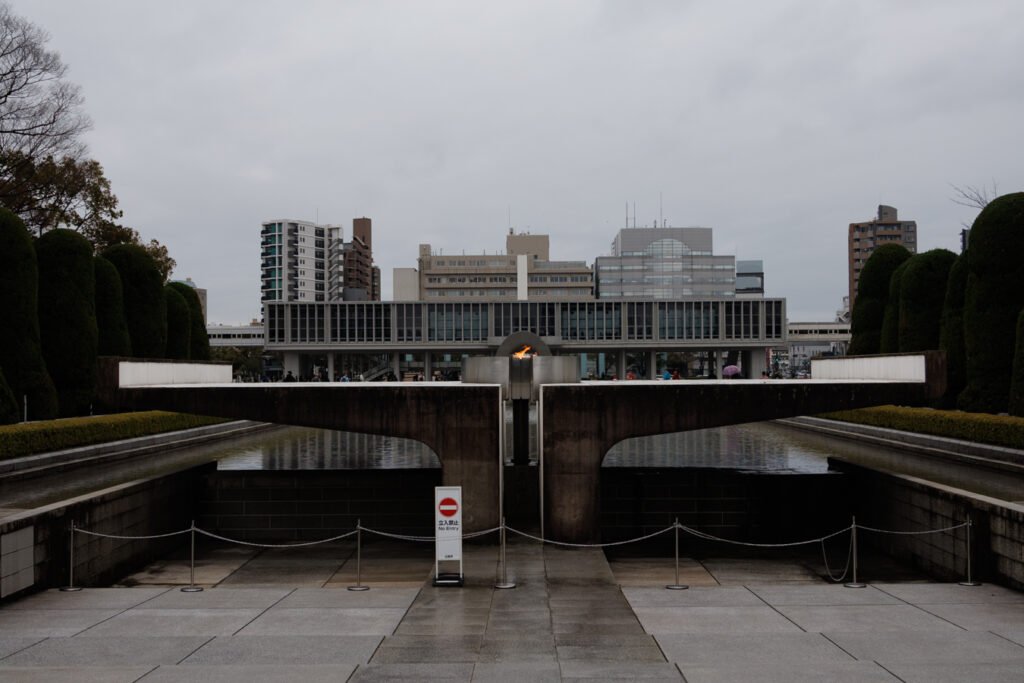
Outside the museum is the peace memorial itself: an eternal flame that will only be extinguished when the world has finally expunged its nuclear weapons. Sadly I don’t think that will happen in my lifetime.