Kyoto
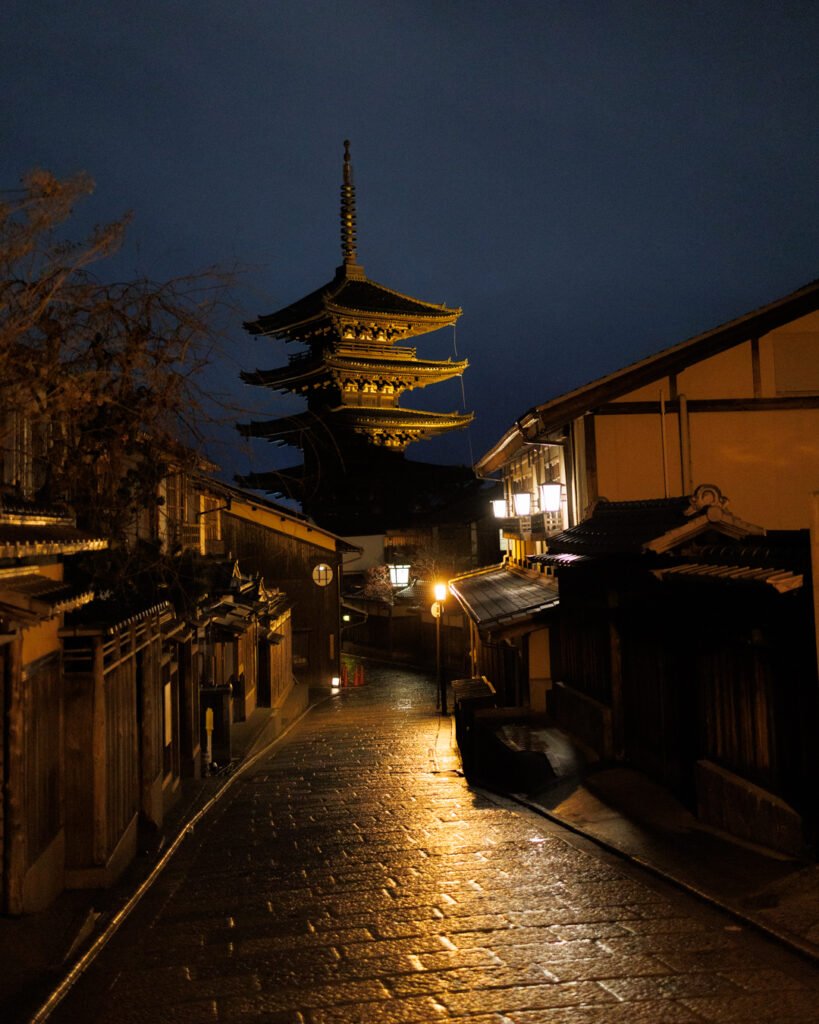
Despite Tokyo and Kyoto being anagrams of each other, that is where the similarities end.
Kyoto is the antidote to Tokyo’s high energy neon-lit populous environment: it has a more traditional feel, focused on gardens and historic streets.
That said, to get a shot of an empty street like the one above means being there very late at night or very early in the morning. The city is massively popular with tourists, and the street above, by 9 am, will be literally heaving. I can really see why tourism is both a blessing and a curse to Japanese people.
In fact a restriction banning tourists from many of the side streets in the Gion Geisha district, was due to come into force a couple of days after our visit, so we were some of the last people able to visit.
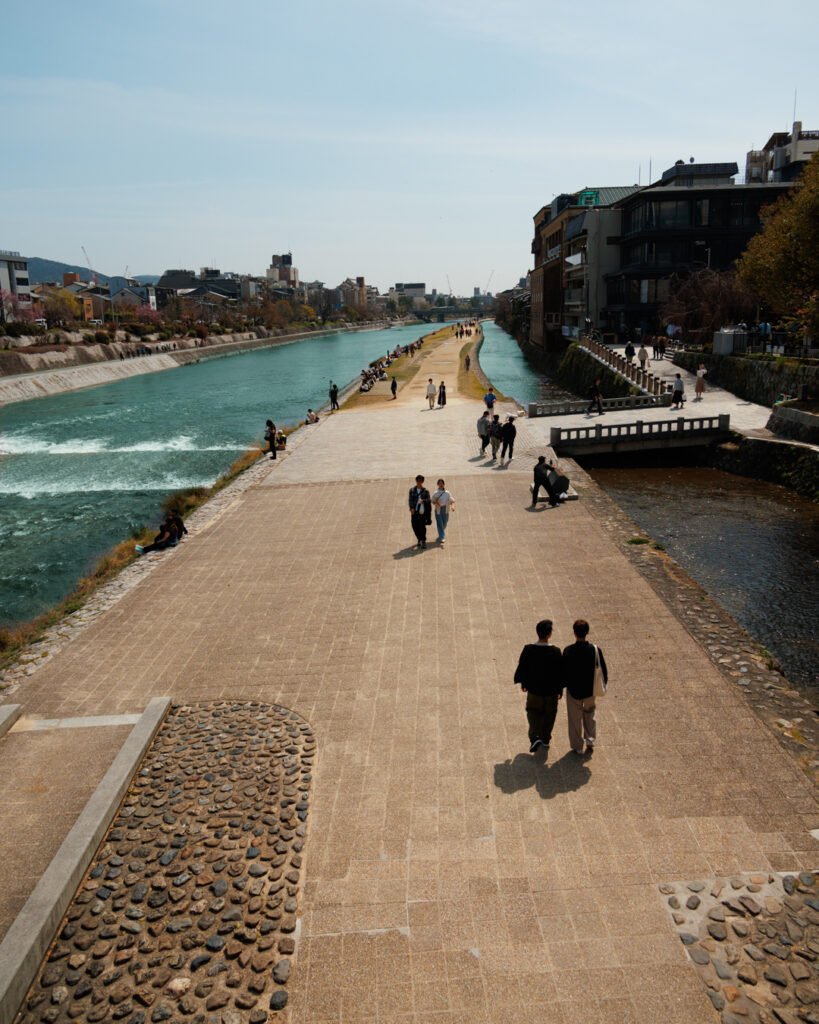
Kyoto, which dates back from 794 AD sits astride the Kamo River and most of the historical districts, temples and shrines are on the east side.
The west side nearest the river is more modern and houses the railway station, and is where our hotel was situated. Further out west there is a second river (the Katsura), the famous bamboo forests and a few other incredible places we visited which are more off the beaten track, of which more later.
The Kamo River
We took a stroll towards the river on the first day, and not having had breakfast at the hotel, passed by a Japanese bakery. This shop was selling classic French pastries such as pain au chocolat of which I regard myself as something of a connoisseur (to keep with the French theme…). I have to say, the Japanese really have taken this very seriously, and had produced something of outstanding quality!
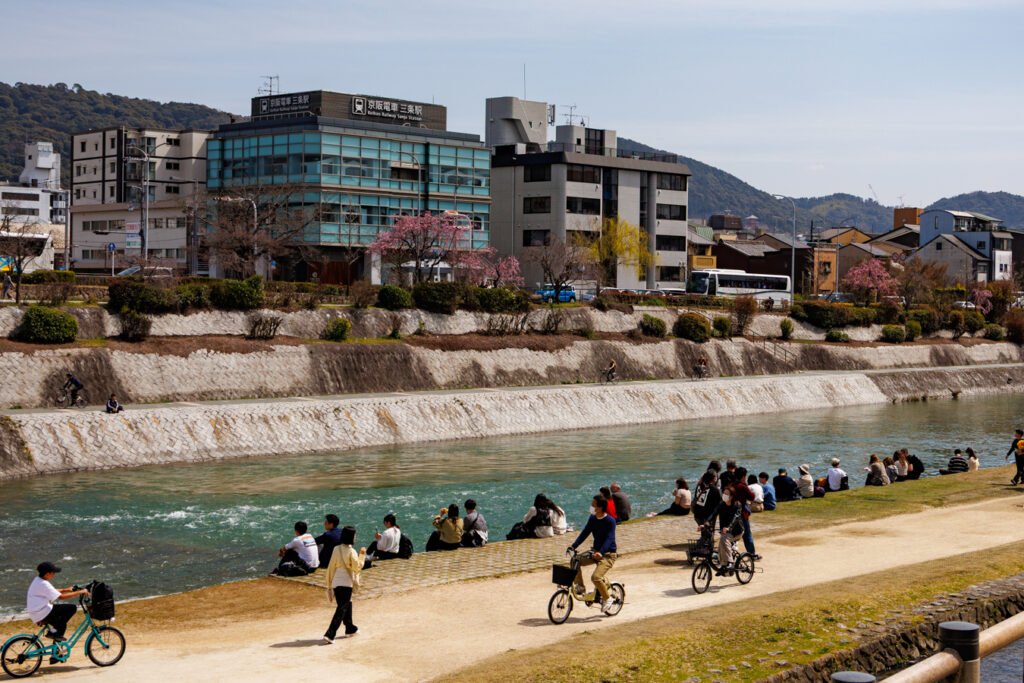
The river bank itself was very popular with both locals and tourists and we joined them to polish off said pain au chocolat plus an unspecified number of other pastries which would do for brunch.
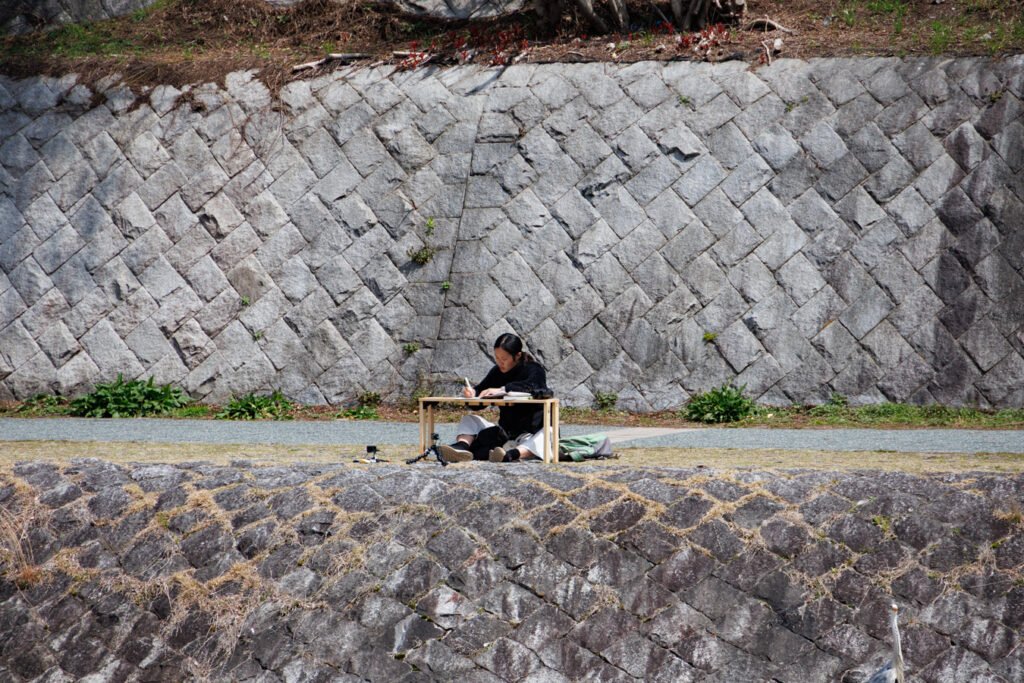
One student had even bought her own desk to study: