Miyajima
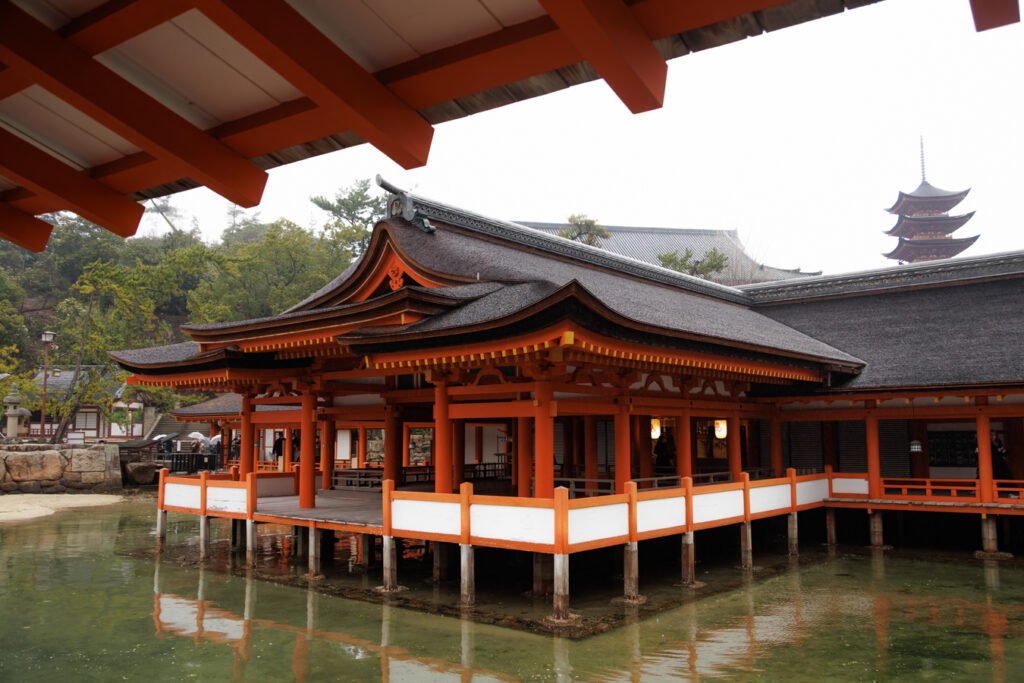
Our next stop was Miyajimi also known as Itsukushima, meaning Shrine Island. It is very close to Hiroshima, a mere 20 km away, but despite this it was miraculously spared from the destruction of the atomic bomb; its main wooden shrine remained intact. One cannot but marvel at the miracle of this sacred place surviving.
To get there, we took an evening ferry from Hiroshima.
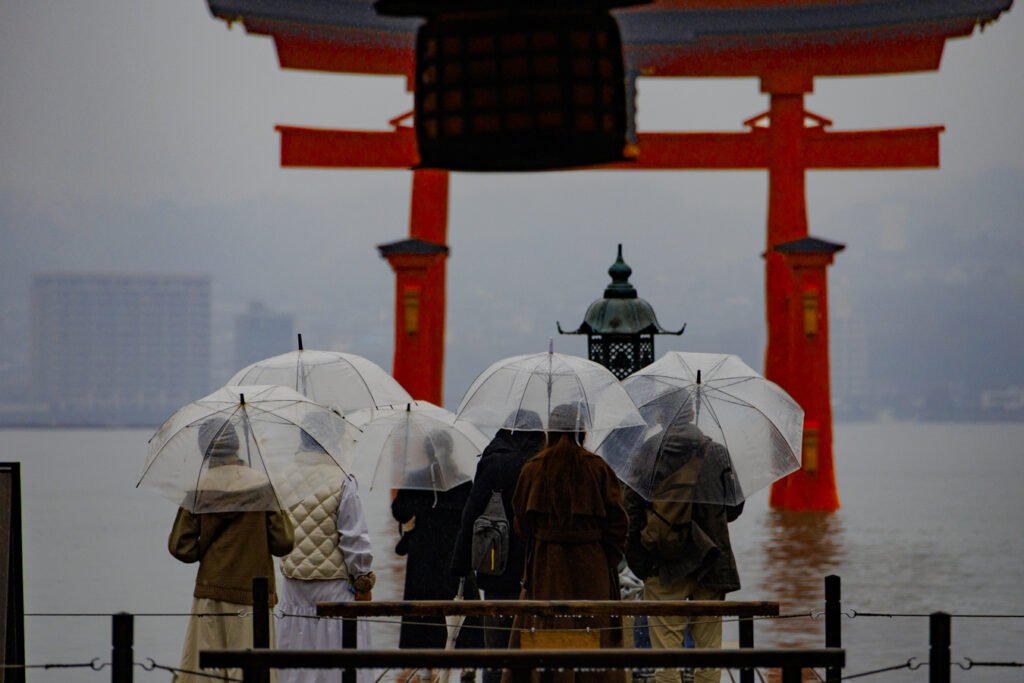
There are many shrines and temples in the island, but the best known in Itsukushima with its distinctive “floating” torii gate which is illuminated at night.
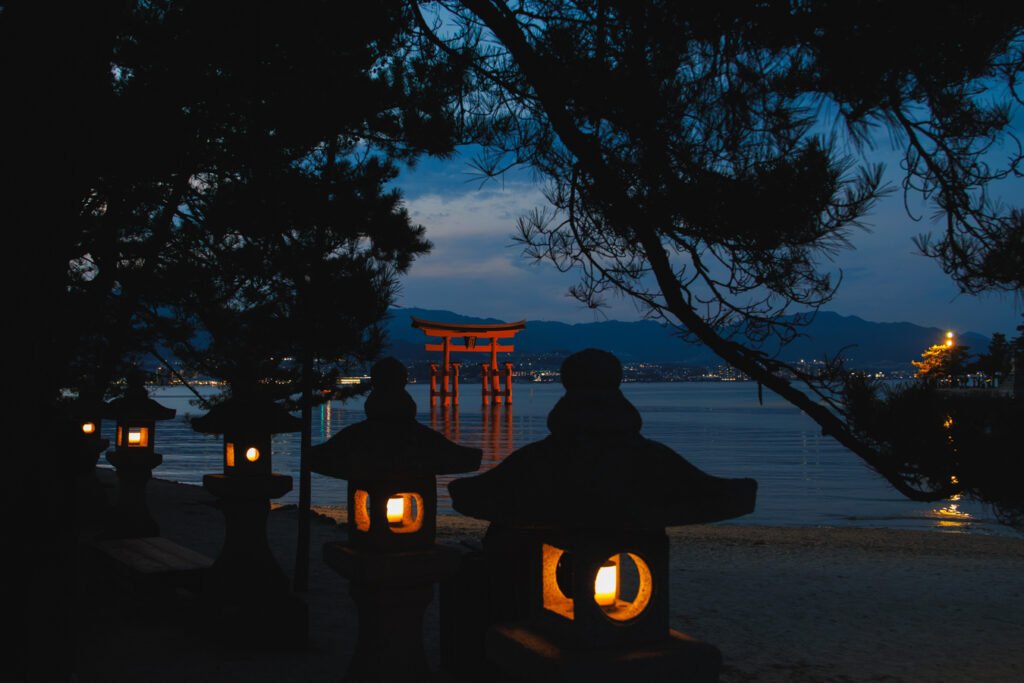
It doesn’t actually float: its weight makes it sit on the sand even when the tide is in and when it’s out, you can walk out to it.
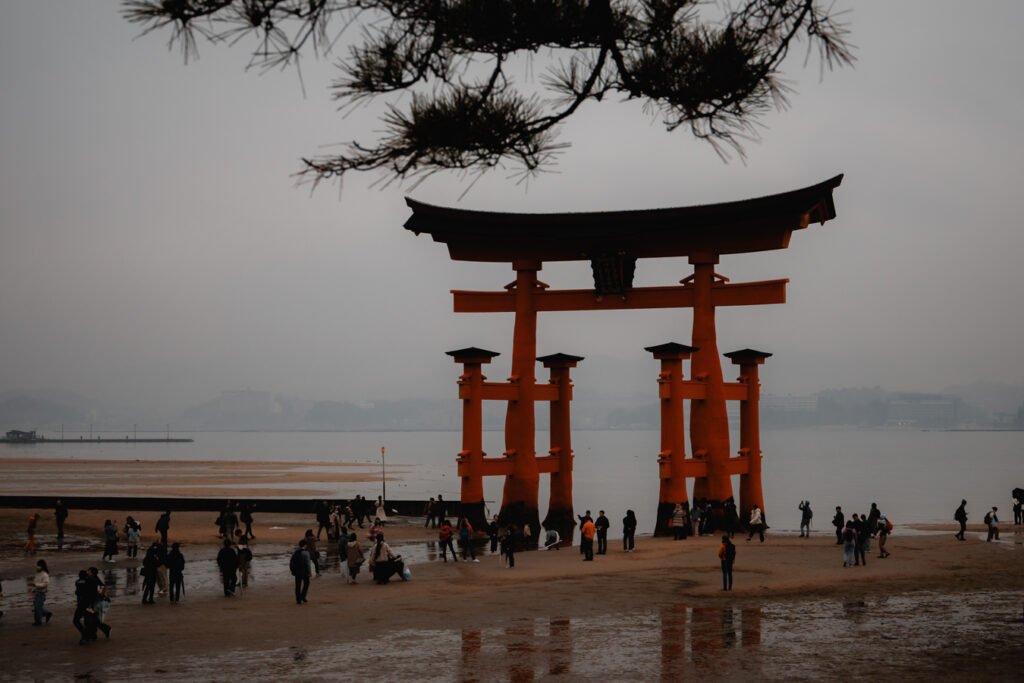
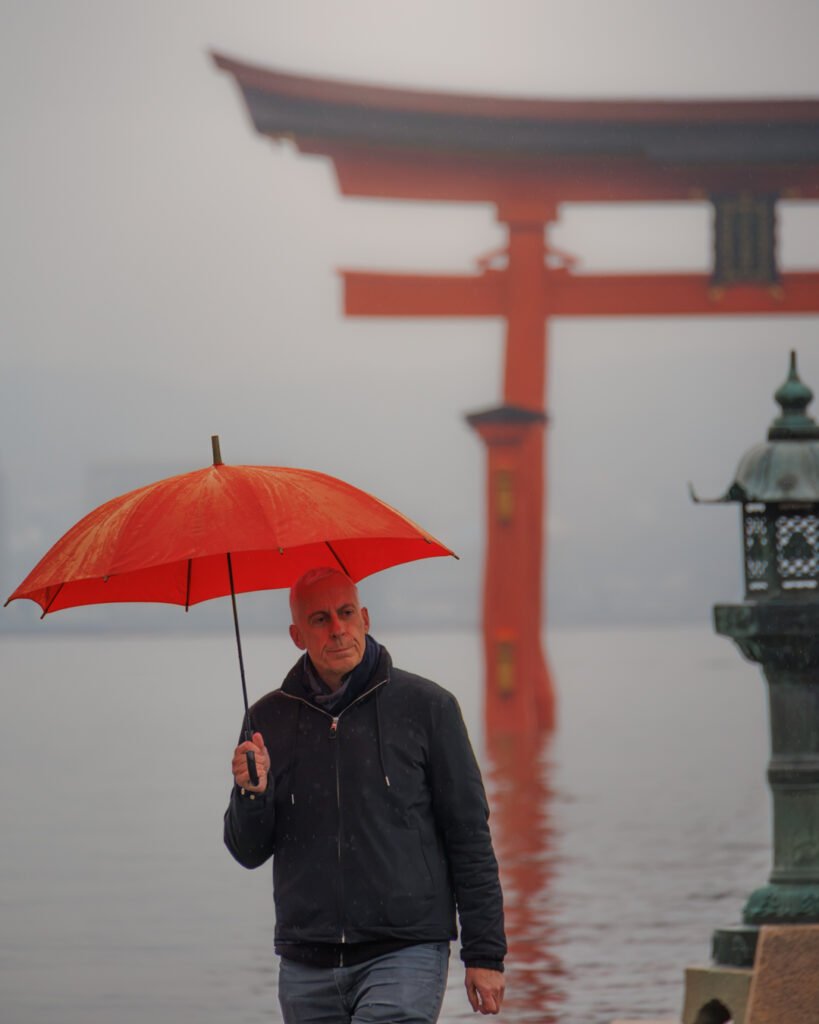
Early next morning, we went to the shrine itself. It was pouring with rain from time to time, but that did afford a few umbrella shots.
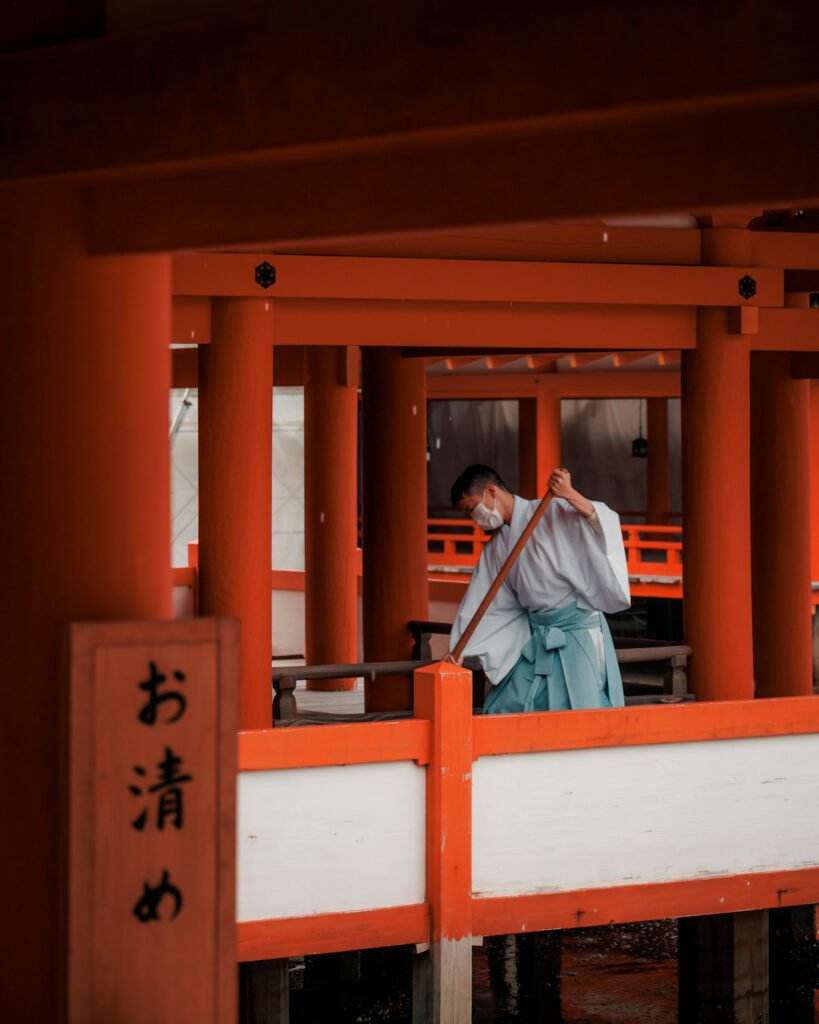
At the shrine, the monks (or more correctly Shinto Priests, presumably junior ones) were sweeping the floors. Only dust today, but since the shrine is suspended on pillars above the water, during high tides they might be pushing away pools of water from the decking.
The photo below is one of my favourites. I wanted to include the lettering in the photo compositionally, but it was only afterwards I discovered it means purification/cleaning, so it is equivalent of the bright yellow tacky warning signs that UK health and safety legislation insists cleaners stand on the floor, and which become as much of a trip hazard as the wet floor itself.
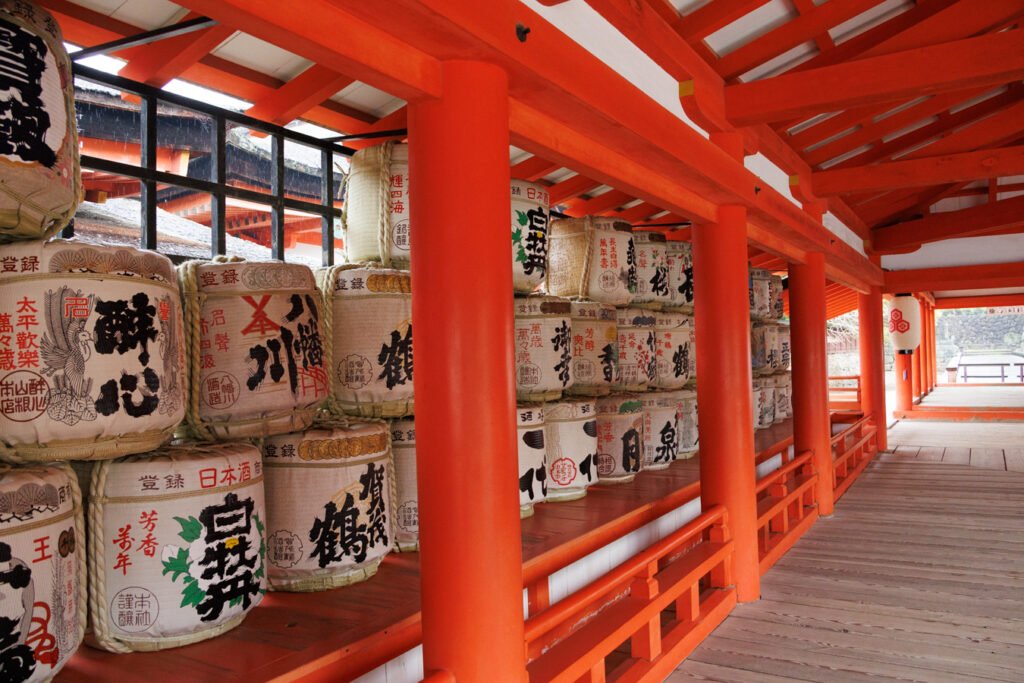
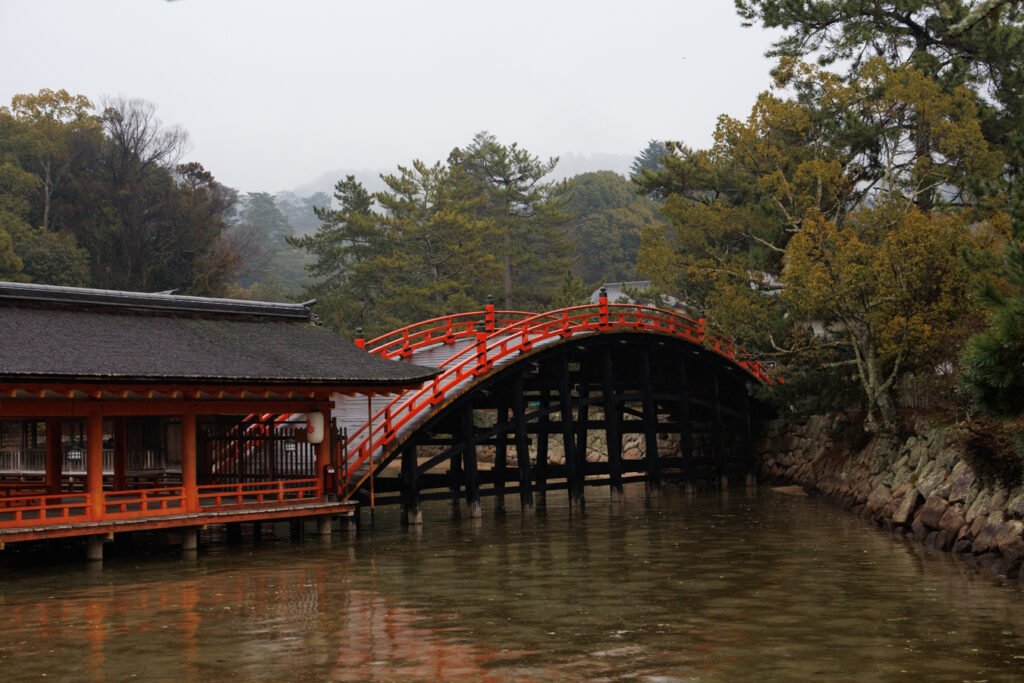
The shrine is quite extensive, with many walkways. It has been considered a sacred site since about 600 AD and is now a UNESCO World Heritage Site. (Mind you, almost everything seems to be one of those these days, but perhaps it’s just because I end up going to a lot of them).
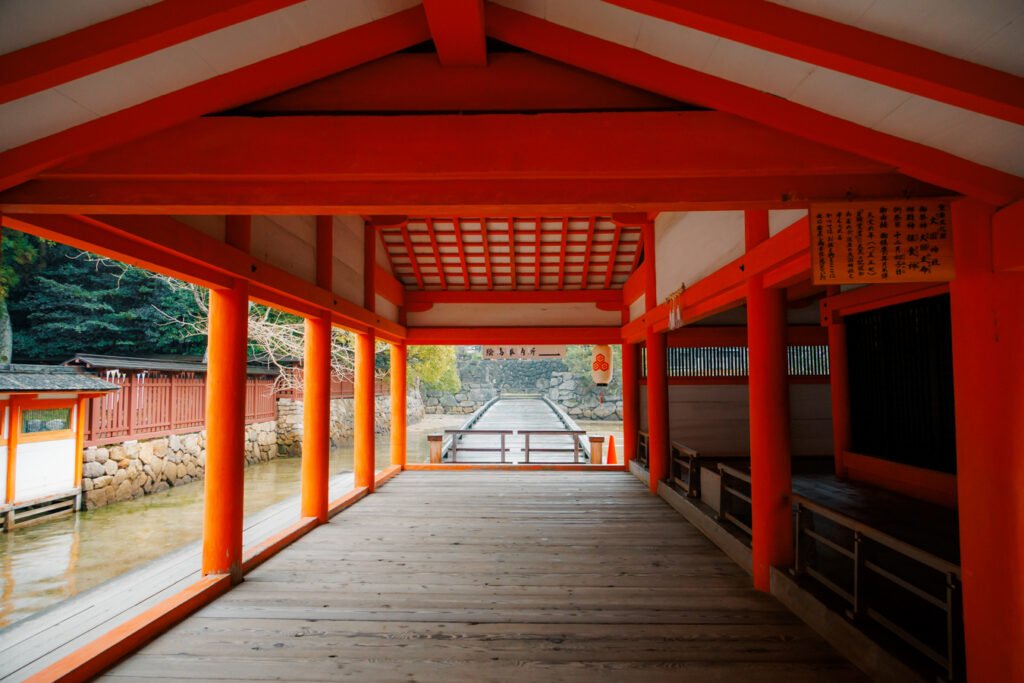
In a building close by, people were queuing to receive a written blessing from a monk. I waited myself and duly received my own.
It obviously wasn’t related to having a good memory, as I have to confess I cannot remember what I did with it, so I am unable to say what the blessing was, but I know I kept it somewhere for safekeeping. When it finally turns up, I will update this page with the information!
After a stroll around the shrine, we went exploring more of the island. I do wish we had arranged for more time here, partly because the weather was not the best and seems to be very changeable, but also because there is plenty to see.
A visit to a Japanese tea house was in order first of all. Now this proved a slight physical challenge: for some reason on this trip I was struggling to bend my right knee. Most people kneel on the floor to partake, but I just couldn’t do it. I did, however, managed to sit but need to roll-over to getup afterwards, a slightly ungainly manoeuvre.
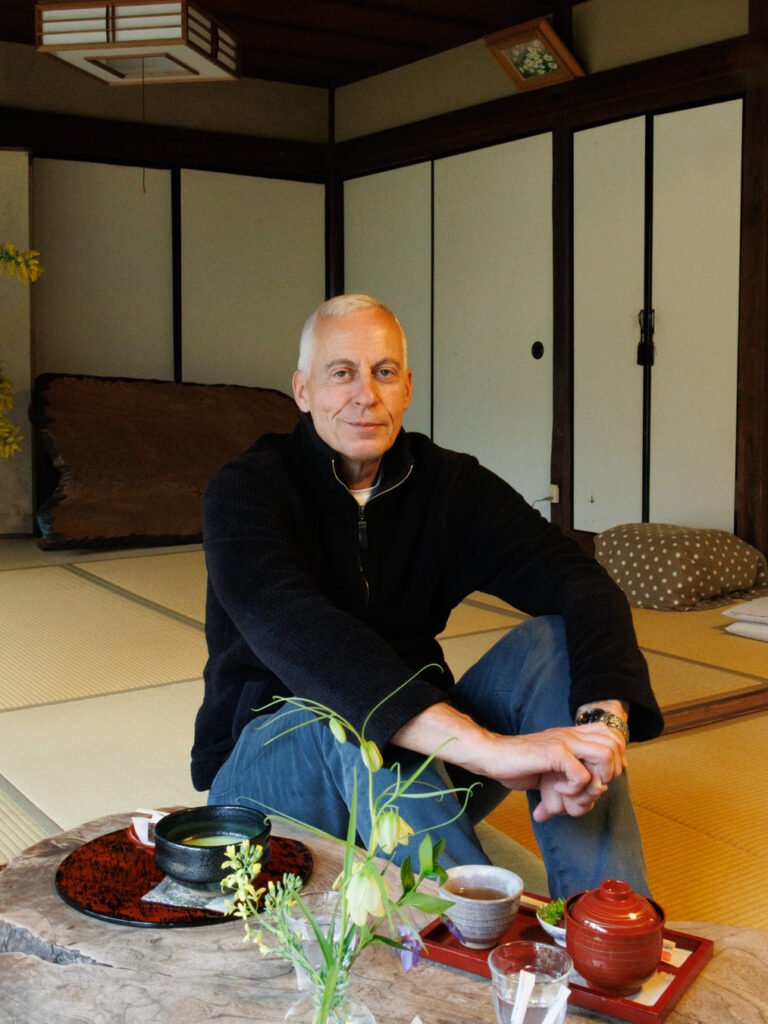
The Japanese take their matcha very seriously: the health benefits are well known, and unlike the Japanese toilet, the clamour for it is now pretty much worldwide. There is something about the experience of sipping it in an authentic tea house such as this one that cannot be matched by the average western coffee house.
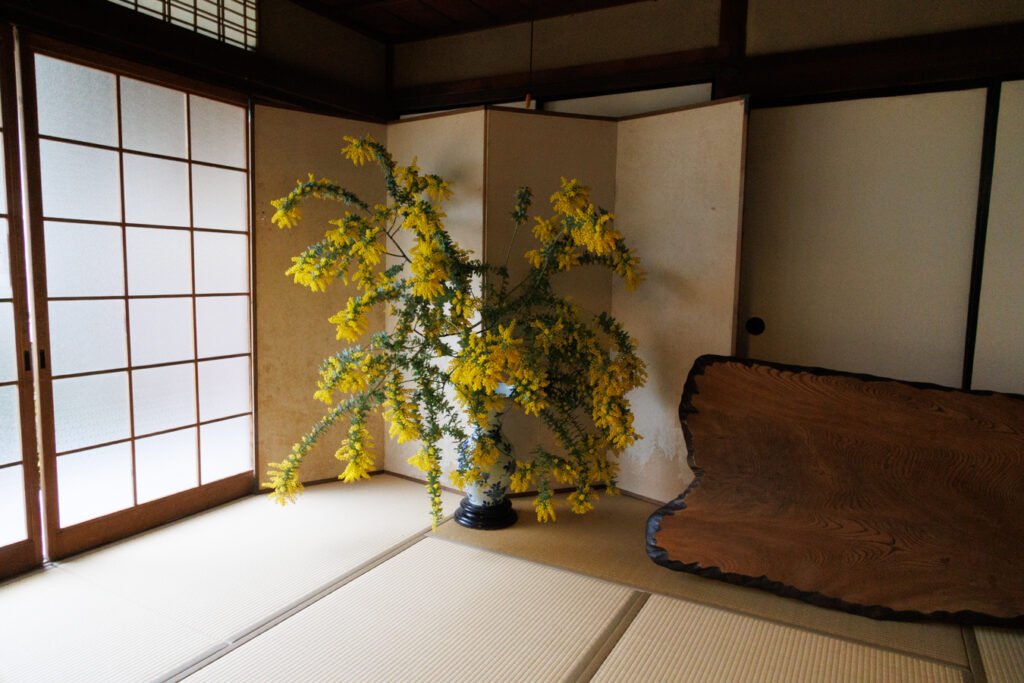
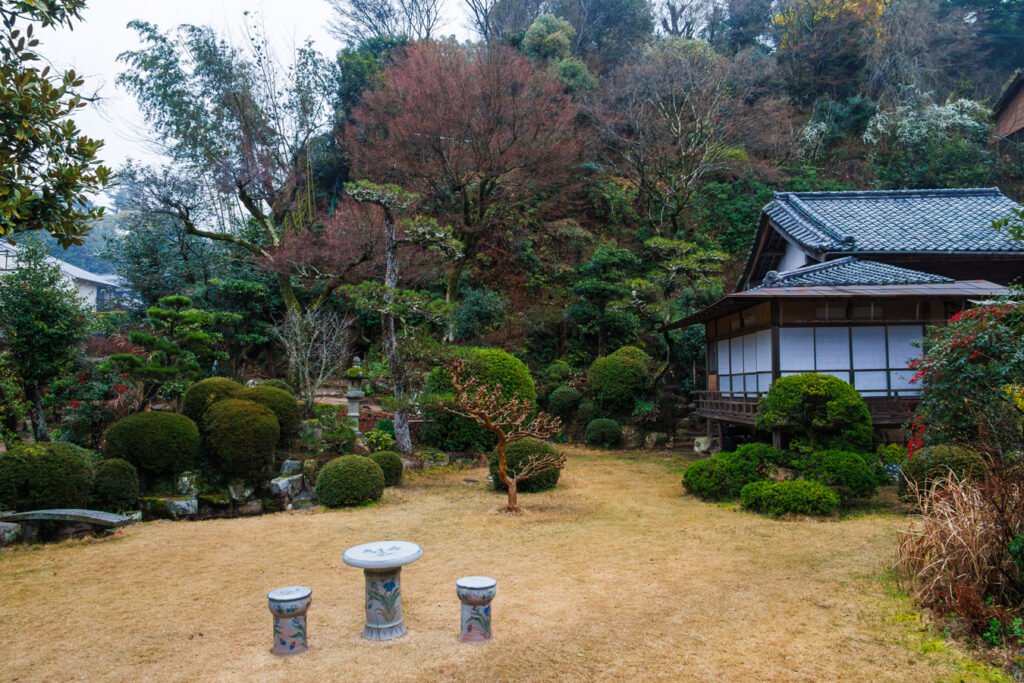
Nor could a visit to the toilet which involved walking through the screens above into this incredibly beautiful garden.
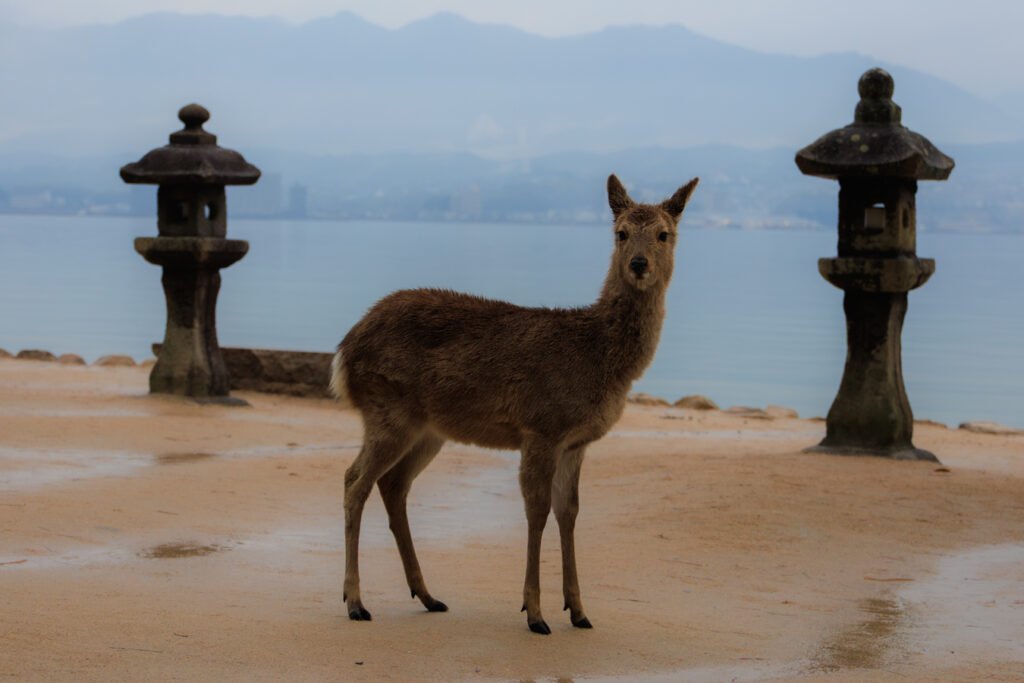
The island is also home to several friendly deer which roam freely through the streets. I say friendly, but I didn’t really test this hypothesis as I still have memories of a monkey in Malaysia that was friendly until it wasn’t…looks can be deceiving!
We just had time to go up to one of the Buddhist temples, with their rotating prayer wheels., inside which are tightly wound scrolls of sacred mantras. There was also a large gong which I took great delight in sounding!
There are other temples and walks galore on this beautiful island, but the itinerary beckoned and it was time to get the ferry back to Hiroshima and onto the next port of call – Kyoto.